Official website links end with .gov.sg
STACK Conference 2026
Explore Our Exciting Programme Lineup!
*Please note that the programme may be subject to change without prior notice.
In this session, you'll learn how to effectively use built-in Apps like Distributed Tracing, Logs, Notebooks, Dashboards, and Smartscape to tackle challenges such as: - Critical performance issues - Problematic exceptions and logs - Complex transactions - Misconfigured deployments You will also discover how to use DQL (Dynatrace Query Language) to automate root cause analysis with Workflows. Who should attend: Devops engineer, Performance engineer, Architects, SRE engineers Prerequisites: To participate in this workshop, attendees only require a laptop with a web browser. Our presenter will guide you through a series of demonstrations to explore the technology.

Mr Myrvin YAP
Principal Solutions Engineer, APAC, Dynatrace
Mr Jason SOH
Assistant Director, Infrastructure Engineering Management, GovTech SingaporeWhether you are building critical public infrastructure or high-scale commercial platforms, ensuring the reliability of distributed systems is paramount. When modern applications face network outages, flaky APIs, or infrastructure failures, they must recover seamlessly without losing state or disrupting the user experience. This hands-on DevDay workshop introduces Temporal, an open-source durable execution platform that enables engineering teams across the private and public sectors to build invincible, fault-tolerant applications. By abstracting away the heavy lifting of distributed systems, such as manual retry logic, complex state persistence, and failure recovery, Temporal empowers developers to focus entirely on business logic rather than writing defensive boilerplate code. Through interactive, scenario-based coding sessions and architectural deep dives, attendees will learn how to: - Simplify Distributed Architectures: Replace brittle message queues, ad-hoc database polling, and complex state machines with clean, durable workflows. - Build Durable Execution: Manage long-running processes, orchestrate multi-system microservices, and handle transient failures with built-in fault tolerance. - Boost Developer Productivity: Reduce operational bottlenecks and speed up development cycles by eliminating writing boring defensive boilerplate code. - Integrate Agentic AI (Bonus): Add agentic AI capabilities to any application with your framework of choice, leveraging Temporal to ensure long-running AI operations and agent workflows execute reliably without timeouts. Who should attend: - Software Engineers & Developers: Backend developers from both enterprise and public sectors who want to simplify building reliable applications & workflows, or integrate durable AI/agentic capabilities into their apps. - Solution Architects & Tech Leads: Professionals tasked with designing scalable, fault-tolerant architectures and orchestrating complex multi-system interactions. - Platform Engineers & SREs: Engineers focused on improving application reliability, system observability, and reducing operational downtime in production environments. Prerequisites: 1. Bring own laptop 2. Internet connectivity 3. Knowledge of programming languages, e.g. TypeScript/JavaScript, Python, Java, Go
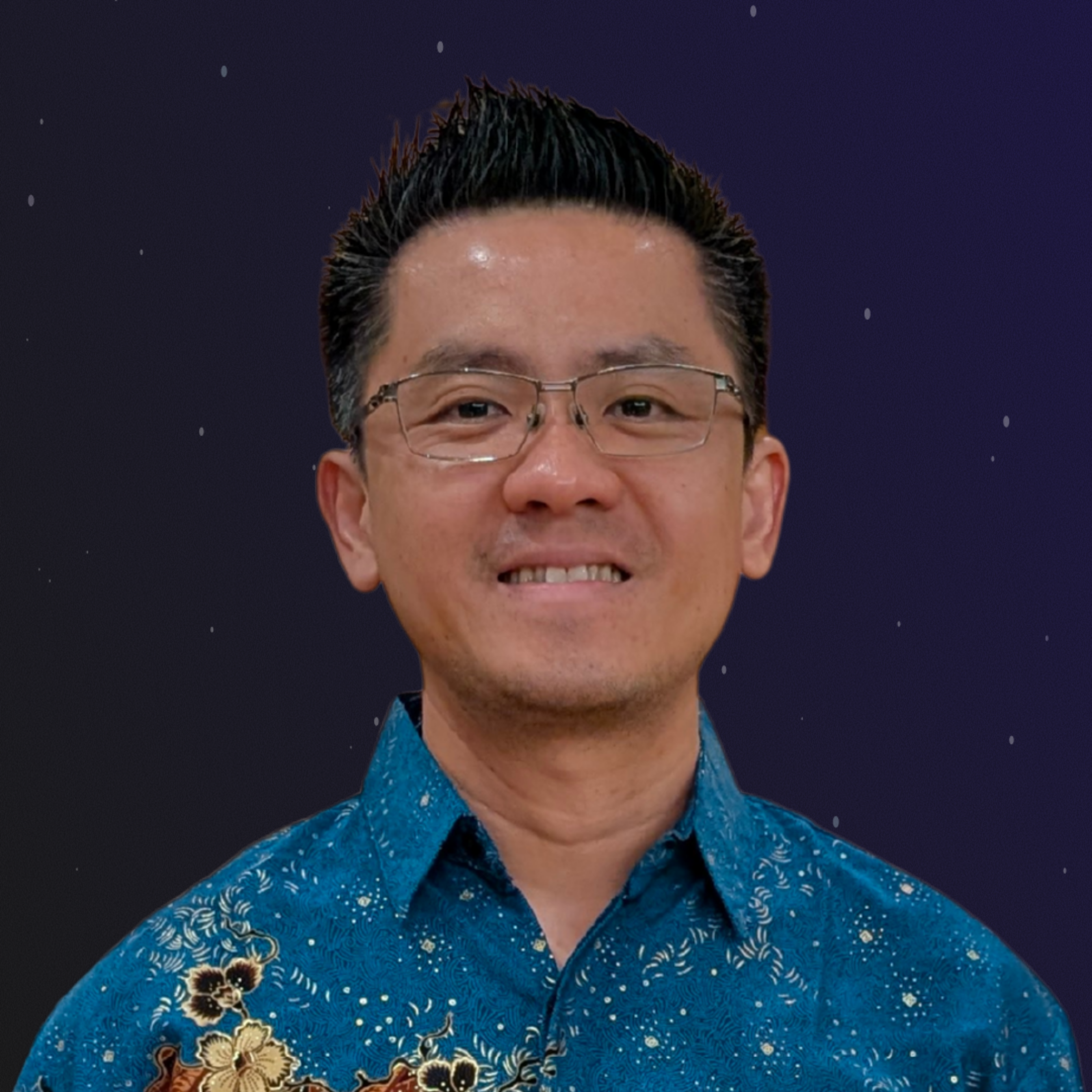
Mr Henry SURYAWIRAWAN
Staff Developer Advocate, TemporalBuilding LLM applications is only one part of the equation. Once an AI system is built, teams also need to know whether it is working well, reliably, fairly, and at scale. This workshop introduces practical ways to design evaluations for LLM systems, moving beyond informal “vibe checks” towards structured, contextual, and scalable evaluation workflows. Participants will learn how to define what should be tested, design representative evaluation datasets, create meaningful scoring criteria, and use LLM-as-a-Judge approaches responsibly with human review and validation. The session will cover different layers of evaluation, from general-purpose benchmarks to application-specific functional evaluations for real-world AI systems. It will also discuss common evaluation challenges and how one might mitigate them. Participants will leave with a clearer framework for evaluating LLM systems in real-world contexts, especially for applications where reliability, transparency, and responsible deployment matter. Who should attend: This workshop is intended for teams building or assessing AI systems, including product managers, engineers, policy officers, and UX researchers. It is especially relevant for participants who want to move beyond informal testing towards a more structured evaluation approach. No deep machine learning background is required, though some familiarity with AI applications, LLMs, or chatbot systems would be good. Prerequisites: Participants should have some familiarity with AI systems or AI-enabled products, whether as a product owner, developer, data scientist, or stakeholder involved in designing, deploying, or overseeing such systems. The workshop is intended for anyone who wants to better understand how to evaluate whether an AI application behaves as intended, including how to define what to test, develop meaningful evaluation criteria and test cases, and assess areas such as quality, safety, and reliability.

Ms Leanne TAN
Data Scientist, GovTech Singapore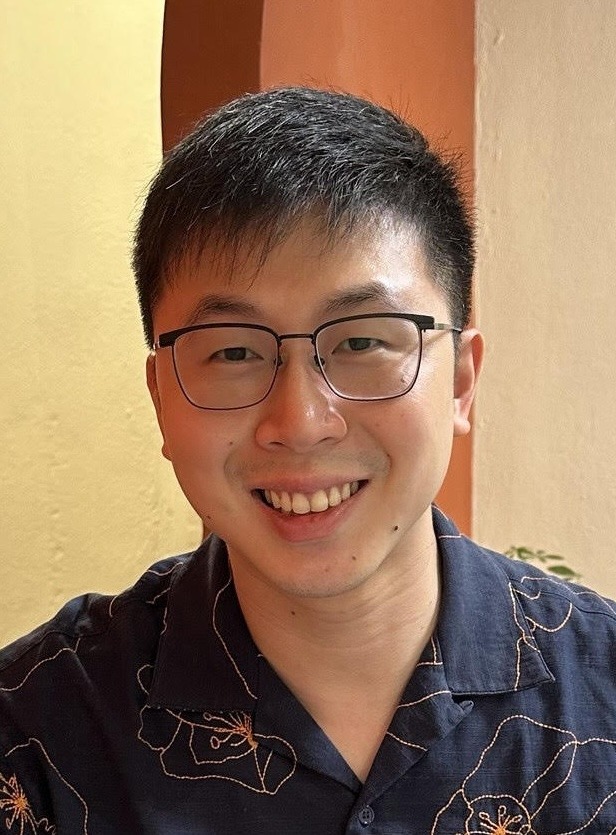
Mr Shaun KHOO
Staff Data Scientist, GovTech SingaporeA hands-on workshop that dives into the building blocks of Agentic AI systems deployed in the real world. These include production-ready concepts pioneered by OpenAI, Anthropic, and leading LLM practitioners in the industry, coupled with first-hand experience from AI engineers at Supertype. Covering: - Building Agentic Systems beyond Chatbots - 6 Agentic AI Patterns for multi-agent AI systems - Guardrails and Enterprise Considerations" Who should attend: Perfect for product leaders and technical business leaders who want a more technical, first-principles glimpse of an agentic-enabled workforce beyond chat-and-query use cases. Prerequisites: No technical requirements, but participants should know they are free to bring their laptops to join along parts of the coding session if they want. If so, they should already have Python installed on the computer. Participants can also attend without a laptop - not a problem.

Mr Samuel CHAN
Incubator Lead, SupertypeThe Open Digital Platform (ODP)—jointly developed by JTC and GovTech—stands as Singapore's premier open middleware for cross-domain data orchestration, powering massive cyber-physical integrations from smart districts like the Punggol Digital District to maritime digital twins. As demand rapidly grows across various public sector agencies to adopt ODP's real-time IoT, 3D simulation, and data interoperability capabilities, scaling the delivery workforce is critical. This interactive workshop introduces participants to the ODP, its role in accelerating the integration and management of smart city and operational technology systems, and how users can use it to build scalable digital solutions. Through presentations, demonstrations and guided hands-on activities, participants will learn how ODP connects systems using protocols such as MQTT, REST, Bacnet and OPC-UA; governs and transforms data through tools and services. The workshop will explain how teams can deploy and connect their own systems and use cases with ODP. Who should attend: System Integrators, Software Engineers, Systems Engineers, Technical Leads, Solutions Engineers, Domain Architects Prerequisites: Internet laptop

Ms Celine CHIA
Principal Systems Engineer, GovTech SingaporeAs AI shifts from autocomplete to agentic workflows, engineering teams that can effectively transit from purely writing every line of code to orchestrating intent with agents will harness the next bound of velocity. This 2-hour session demonstrates how to scale engineering velocity safely by embedding AI throughout the SDLC while maintaining compliance. One way to approach AI-native Engineering is through Intent driven development and in this workshop, we showcase a dual approach to Intent-Driven Development, combining Spec-Driven Development (SDD) and Test-Driven Development (TDD). Centered around our internal agent skills repository, Agent-Prime-Directives (APD), we demonstrate how to bootstrap the agent skills directly into the developer workflow. These framework ensures developers effectively steer AI agents, preventing drift while automatically adhering to standards. Workshop Outline Part 1: Maximizing Engineering Velocity via AI Tools (60 Mins) Outcome: Participants are exposed to AI capabilities that speed up their engineering work. - AI-Driven Development: Authoring features with tools like claudecode, accelerated by pre-built SGDS agent skills to instantly deliver unified, compliant UI components, context retrieval through MCP tools. - Agentic Review & Scan: Leveraging prelude (an code review harness) paired with socket.dev to block supply chain risks in AI-generated code. - Continuous Delivery: Deploying autonomously to a secure, compliant runtime environment using airbase. Part 2: Harnessing Intent-Driven Architecture for quality outputs: Adopting SDD + TDD (60 Mins) Outcome: Participants are exposed to new ways of working with AI agents. - Workflow Adoption: Integrating frameworks like OpenSpec and superpowers directly into daily enterprise software development workflows. - Intent Negotiation: Utilising Spes to lock down scope and changes before code generation. - Endorsed Guardrails: Cherry-picking vetted TDD and SDD agent skills from Agent Prime Directives to establish explicit boundaries for autonomous execution. Key Takeaways: - Speed up engineering with AI Tools - Experience Shift to Intent Driven Development - Enforce Guardrails at Scale Who should attend: - Both Public Officers and Vendors - Roles: Developers, Agency CIOs or Engineering Managers Prerequisites: 1. Attendees should bring a laptop – preferably a Windows or MacOS device (Internet Accessible) 2. Attendees should have: a. Knowledge of how to read and write code in at least one programming language b. Familiarity with running or operating commands with CLI terminal c. Knowledge of Git fundamental to commit and push code d. Experience (preferably) using Gen-AI chat or terminal interface like chatgpt, claude, etc

Mr Alex CHNG
Lead Product Manager, GovTech Singapore
Mr Leon LEOW
Senior Product Manager, GovTech Singapore
Mr Kelvin WIJAYA
Senior Software Engineer, GovTech Singapore
Mr Sheikh Mohd SHAHEED
Senior Product Manager, GovTech Singapore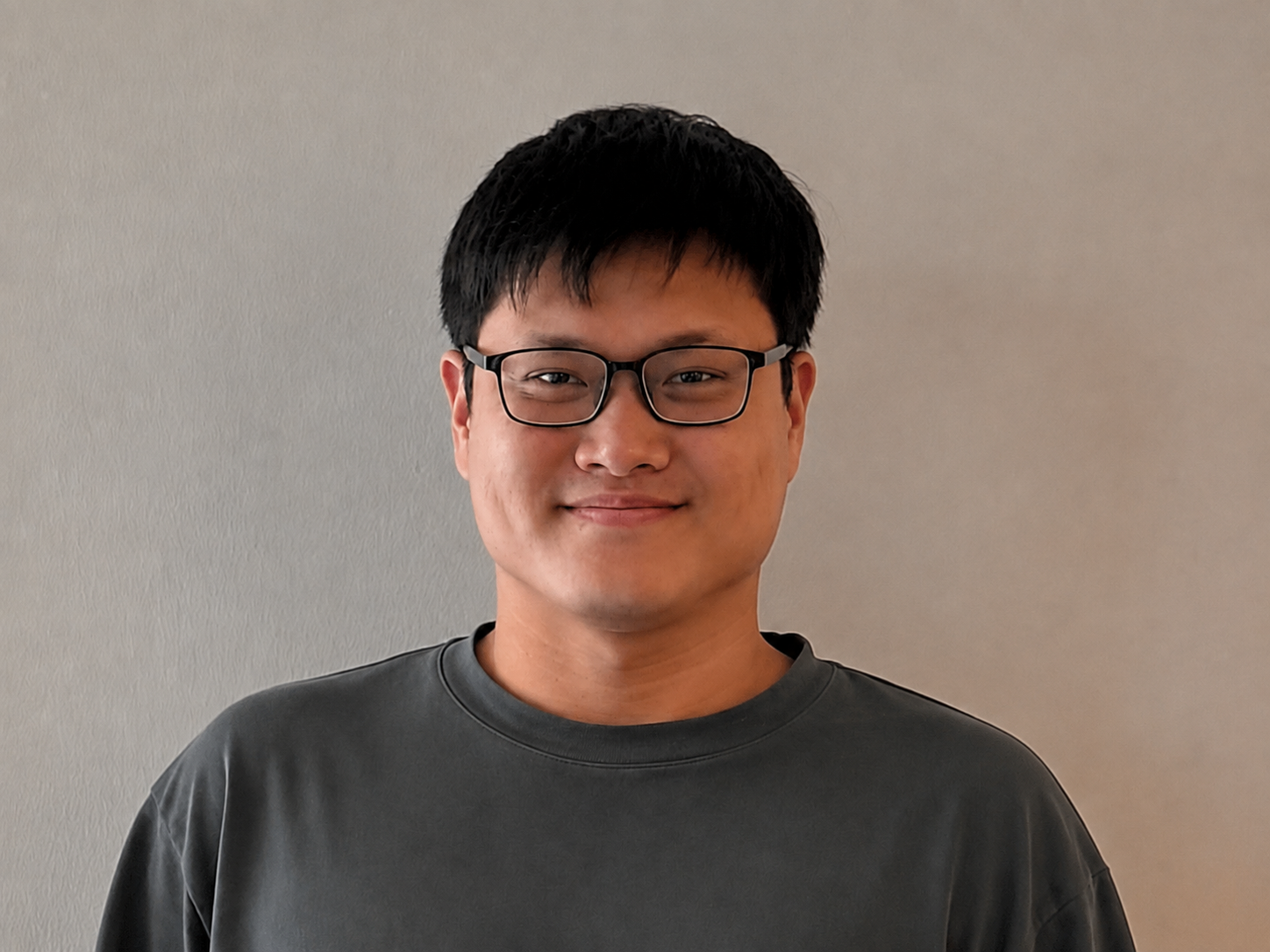
Mr Soedarsono
Staff Software Engineer, GovTech SingaporeWith over 80% of data breaches involving compromised identities, the perimeter is no longer a firewall—it is the user. As we move toward a future of "Agentic AI," where autonomous agents perform tasks on behalf of users, the definition of "identity" must evolve to ensure digital safety for all. In this hands-on, gamified Capture-The-Flag (CTF) workshop, participants will move beyond basic MFA to explore the architecture of modern, phishing-resistant identity management. Who should attend: Cybersecurity Specialists, Identity Architects, and Developers interested in AI Governance. Prerequisites: Laptop with internet connectivity 2. Cisco ID (participants can create one during event) 3. Basic understanding of cloud-based Identity & Access Management is preferred but not required

Mr Takashi YAMAMOTO
Identity Security Architect, Cisco Systems (USA) Pte LtdIn this hands-on bootcamp, attendees will learn about the importance of having visibility and control over their agentic AI applications. Participants will start with a pre-built agentic AI application (using open source framework such as Strands, Openclaw or LangGraph ) and learn to use TraceCtrl (open source and free for developers) to instrument it, trace agent interactions, and surface security violations. By the end, they'll have a full topology map of the app's agent communication and a concrete attack surface analysis with actionable hardening recommendations. Agenda: Part 1: Intro to Agentic AI & TraceCtrl (30 min): Overview of agentic AI and how TraceCtrl provides observability into agent behaviour, followed by a live product demo. Part 2: TraceCtrl Setup & Strands/OpenClaw Integration (60 min): Install and configure TraceCtrl to run alongside your agent, integrate it with your Strands/OpenClaw setup, and run a scan to generate an inventory of configured components, a static topology map, and a security assessment of your Strands/OpenClaw instance. Part 3: Remediation & Security Scenarios (30 min): Walk through how to fix identified issues, including auto-remediation, followed by a live demonstration of security scenarios on Strands/OpenClaw. Who should attend: This bootcamp is targeted at Developers or Security Analysts working in Public Sector or Enterprises who are keen to learn more about how to see and trace agentic AI system interactions and to detect security violations and respond or mitigate them. As there will be lots of hands-on lab and exercises, participants need to be proficient with CLI tools including git, dockers, api, etc. Prerequisites: 1. As this is a hands-on bootcamp, we will need every participant to have their own laptops with the following hardware specifications: a. Windows 11 and above (with WSL2), min 8GB RAM, 2 Core CPU and 5GB Free HDD space b. MacOS 12 and above, min 8GB RAM, 2 Core CPU and 5GB Free HDD space 2. Software requirements: We will be using the following software. Will be ideal if these are pre-installed before the bootcamp. a. Docker Desktop. https://www.docker.com/products/docker-desktop/ b. Python 3.10+. https://www.python.org/downloads/ c. Git
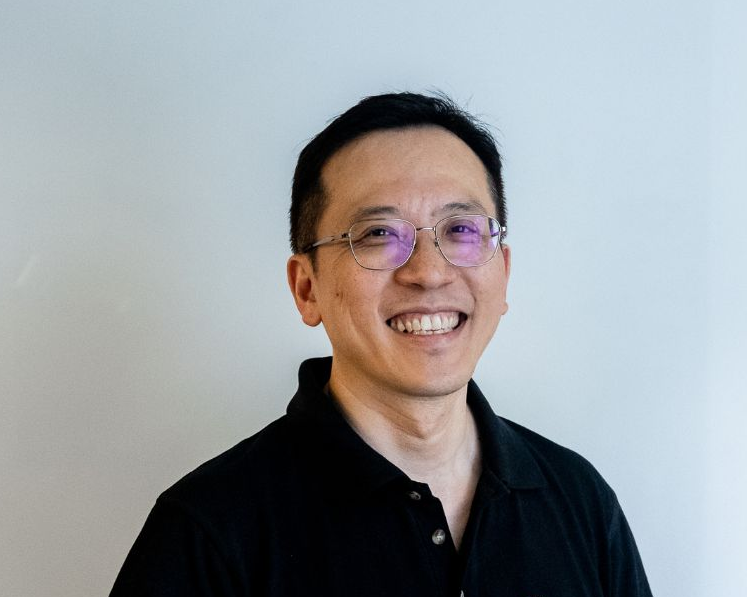
Mr Matthias CHIN
Founder and Chief Executive Officer, CloudsineAIHCLTech hands-on workshop focused on data-enabled user experience through Agentic AI. The core proposition is to transition from traditional analytics to agentic, data-driven workflows, where AI systems orchestrate the full data lifecycle—from discovery and governance to analytics, decision-making, and service delivery. Participants will work in a sandbox to build a context-aware agentic data platform, enabling automated workflows such as dataset discovery, classification, privacy enforcement, anomaly detection, and data product lifecycle management. The workshop aligns with Singapore’s push toward data-driven public services, cross-agency data sharing, and proactive citizen experiences, while addressing persistent challenges such as data silos, governance complexity, and slow insight generation. It demonstrates how agentic AI enables real-time, context-driven decision-making, allowing agencies to anticipate needs and deliver personalised, proactive services while maintaining compliance and trust. Participants will learn key capabilities, including discovering and contextualising distributed data, applying governance controls (classification, masking, validation), generating real-time insights, detecting trends and anomalies, and building transformation pipelines and data products with lifecycle governance. A representative use case involves a government agency building an agentic data platform for public-service insights, supporting use cases such as demand forecasting, resource optimisation, and citizen feedback analysis. The sandbox includes synthetic data, policy metadata, mock integrations, and governance rules to simulate real-world environments. Participants will build end-to-end agentic data workflows that automate data discovery, metadata generation, quality validation, analytics, and data product publishing. The workshop highlights how data evolves from a passive input into an executable asset driving decisions and outcomes. By the end of the session, participants will deliver a working prototype, reusable patterns for governance and analytics workflows, and a practical understanding of transforming data into insights and decisions. Expected benefits include faster data discovery, reduced manual effort, improved governance consistency, and better traceability. Who should attend: Data Engineers, Data Analysts, Data Stewards, Data Product Owners, Solution Architects, Government digital and data teams. Prerequisites: Bring your laptop, charger, and venue with high bandwidth Wi-Fi connection. 2. Check your browser - Use the latest Google Chrome or Microsoft Edge. Internet Explorer (including Edge's ""IE mode"") is not supported and will block sign-in. 3. Bring your own Anthropic (Claude) API key 4. Sign up or log in at console.anthropic.com 5. Create a key under Settings → API Keys (starts with sk-ant-) 6. Add a small credit balance — workshop usage is inexpensive, but a $0 balance blocks every request 7. If your track uses GitHub publishing. Have a GitHub account and a Personal Access Token (repo scope) ready. We'll confirm on the day whether this applies to your session.

Mr Arunkumar JAMBULINGAM
Data & AI Practice Principal, HCLTechWhat if coding felt less like wrestling with syntax—and more like setting the vibe? In this hands-on workshop, we’ll explore a new way of building software by pairing fundamental coding concepts with the latest AI tools. Whether you’re just getting started or looking to level up how you build, this session is designed to help you work with AI, not against it. We’ll cover: - Context Engineering & Planning — shaping the right inputs, constraints, and step-by-step plans so AI produces more reliable, high-quality results - AI Agents — how to delegate tasks and collaborate with AI to accelerate development - Spec-Driven Development — turning clear intent into working software with less guesswork Expect a practical, interactive session where you’ll learn how to go from idea → specification → working code, all while developing a stronger intuition for how modern software gets built. Come ready to explore, build, and get a little spicy with your coding workflow. Who should attend: - Folks with some experience in software development. - Knows their way around an IDE. - Bonus points if they have used a Terminal / Command Prompt before. Prerequisites: Laptop (Mac or Windows) with enough user privileges to surf the Internet and install software. 2. Software (free to use and download): a. VSCode (https://code.visualstudio.com/) b. OpenCode (https://opencode.ai/) 3. Account with OpenCode Zen (https://opencode.ai/zen) (just need a free account, no need to add your credit card).
Mr Michael CHENG
Deputy Director, Engineering Management, GovTech SingaporeThis hands-on workshop combines modern observability practices with AI agent development in Elastic. Participants begin by deploying an EDOT-instrumented OpenTelemetry demo, validating end-to-end telemetry, and injecting controlled failures to troubleshoot a feature-flagged product catalog issue. Using logs, metrics, and distributed traces, they analyze service dependencies and apply AI-assisted investigation techniques during a payment stress scenario to accelerate root-cause analysis. Building on this foundation, learners shift to a UI-first agent workflow in Kibana. They inspect the Kafeju agent, understand how tools are defined, and create custom ES|QL-backed tools that integrate directly into the agent. Through exercises like exploring ML anomalies, reverse-engineering existing tools, and designing new ones, participants enable multi-tool reasoning that combines built-in and custom capabilities. The workshop culminates in agents answering realistic, data-backed FinOps-style questions, demonstrating how observability data and AI agents work together to reduce time-to-resolution and enhance operational insight. Elastic Serverless Observability removes five operational concerns you currently manage — shards, storage tiering, version upgrades, monitoring pipelines, and fixed infrastructure nodes. They stop being your problem entirely. That frees you up to focus on what the platform now enables: AI-driven investigations that surface root cause automatically, 100+ built-in ML jobs for anomaly detection and forecasting, ES|QL for sub-second queries across millions of metrics, and 450+ integrations out of the box. You get unified logs, metrics, traces, and synthetic monitoring in a single project; SLOs and alerting without infrastructure sizing; and continuous access to new capabilities like Knowledge Indicators and agentic remediation workflows — no upgrade cycle required. This workshop walks through the platform hands-on so you can see what's available from day one. Who should attend: Software developers, Project Managers

Mr Sean MATTHEWS
Senior Customer Architect, Elasticsearch Pte Ltd
Mr YAP Yi Sheng
Engineering Lead, GovTech SingaporeMulti-agent AI isn't just a buzzword — it's a workflow superpower. In this workshop you will build a practical agentic pipeline from ideation (using Claude Design) to code implementation (using Claude Code). Along the way, we will build a generic code-generation agent, a documentation agent, and a Playwright testing agent that work in sequence on a real project. You'll understand how to design agent handoffs, handle failures gracefully, and adapt the pattern to your own stack. You will leave the room with working code and a mental model you'll actually use in real life. Who should attend: Anyone with a Developer background. Prerequisites: Participants will need a laptop with a Claude paid license.
Mr Michael ISVY
Head of Engineering, ZenikaIn this hands-on workshop, you'll work with two of AWS's frontier AI agents. AWS DevOps Agent acts as your autonomous on-call engineer, correlating metrics, logs, and deployments to investigate incidents and identify root causes in minutes. AWS Security Agent secures your applications throughout the development lifecycle, from design reviews and code analysis to penetration testing and remediation. You'll deploy both agents against real scenarios and walk away with practical experience putting them to work. Who should attend: Developers, builders, DevOps engineers, SREs, platform engineers, and cloud architects who want to understand how autonomous AI agents can transform incident response and operational excellence.

Ms Charis WONG
Senior Solutions Architect, Amazon Web Services
Mr Farid BAHARUDDIN
Senior Solutions Architect, Amazon Web ServicesCoding agents make implementation faster, but they can move bottlenecks into review, testing, deployment, and operations. Public-sector engineering teams also need traceability, repeatability, separation of duties, and controlled production changes. Participants will build a small Agent Development Lifecycle workflow for a simulated digital service. An incoming issue triggers an agent to investigate the problem, inspect current documentation, propose a code change, run automated checks, create a preview, and stage the result for human review. Participants will inspect traces and learn where autonomous execution should stop and accountable human judgment should begin. The workshop uses Cloudflare Workflows, Workers, agent tracing, programmable CI/CD, preview deployments, and browser-based validation. It shows how agencies and government-linked enterprises can increase engineering velocity without allowing autonomous systems to bypass quality, security, or change-management controls. Who should attend: Software developers, DevOps and platform engineers, engineering managers, SREs, test engineers, and teams evaluating coding agents or intent-driven development. Prerequisites: Bring an internet-enabled development laptop with Git, Node.js 20+ or Bun, and a code editor. Familiarity with Git, CI/CD, and TypeScript or JavaScript is recommended. Starter repositories and temporary sample infrastructure will be provided.
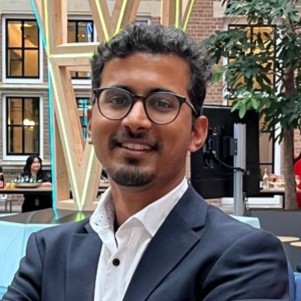
Mr Omkar KHAIR
Senior Solutions Architect, Developer Platform, CloudflareA 2-3 hour hands-on workshop on working with LLMs as an unfamiliar kind of intelligence rather than software you configure. First half: we build together to surface the principles that actually drive model behaviour, several of which contradict common advice. Second half: participants apply them to a problem from their own work. Mix of local models on a laptop and frontier APIs. Details: Most teams that deploy LLMs treat them like software you configure: set the parameters, write the instructions, ship it. Then the model ignores half the prompt, invents a fact, or behaves differently than it did yesterday, and it gets logged as a bug. Often it isn't. Working with these models has more in common with learning to collaborate with an unfamiliar kind of mind than with configuring a system, and that shift in framing is what this workshop is about. The first half is hands-on and structured. We build together to surface the principles that actually govern model behaviour, several of which run against common advice. Why over-specifying a prompt can make output worse. Why forcing temperature to zero can degrade a reasoning model rather than stabilise it. Why a constrained workflow tends to beat open-ended prompting. How a model can check and correct its own output, and where that approach breaks down. We run small local models on a laptop where that makes the point, and use frontier APIs where the task genuinely calls for it, so participants leave with a clearer sense of which to reach for, and how much routine work no longer needs the cloud at all. In the second half, participants work on a problem from their own context with guidance. The principles tend to land more clearly against real work than against a sample dataset. This matters most as systems become agentic: handing a model autonomy over a multi-step workflow only works if you understand the mind you're delegating to. The aim is practical: to leave with a more accurate mental model of how these systems behave, and the judgement to work with them rather than around them. Who should attend: Developers, architects, and technical staff who already deploy LLMs but can't always explain why a given model was chosen, or why it behaves the way it does. No prompt-engineering background required; a real use case matters more. Prerequisites: Bring a laptop and a real use case / a problem worth solving.

Mr Uli HITZEL
Principal AI Strategist, NaidaThis technical workshop moves beyond a generic demo by guiding participants through a progressive, end-to-end build of agentic systems. The session starts with a single tool-using agent that can perform tasks such as data retrieval, validation, and API calls, allowing participants to observe how it reasons and selects actions. This foundation is then extended into a coordinated multi-agent workflow, where specialized agents collaborate. One agent handles data retrieval using RAG, another validates accuracy and policy compliance, and a third generates responses or triggers an external API such as a mock government service. This progression demonstrates how autonomy emerges through structured composition. A key focus is making agent reasoning visible. Participants will observe the full reasoning loop including planning, acting, observing, and refining, as well as how tools are selected at each step. By exposing these intermediate decisions, the workshop goes beyond prompt-response interactions and provides practical insight into how agents operate, debug, and improve. The workshop uses a GovTech-friendly technology stack, with Python as the core language and LangGraph for orchestration. A lightweight retrieval layer, either mocked or vector-based with optional PostgreSQL integration, supports data access. The emphasis is on how these components work together rather than deep framework complexity. A dedicated module focuses on guardrails and responsible autonomy. Participants will learn how to enforce control mechanisms such as restricting tool access, preventing leakage of Personally Identifiable Information, and applying policy-based constraints on agent actions. Examples comparing behavior with and without guardrails highlight the importance of safe and compliant design in regulated environments. The session includes a guided hands-on component using a pre-configured repository or containerized setup. Participants will adjust prompts, swap or disable tools, and modify agent roles to observe how behavior changes in real time. This reinforces understanding and builds confidence in working with agentic systems. Finally, the workshop introduces key multi-agent design patterns, including separation of responsibilities, planner-executor workflows, and cooperative agent interactions, helping participants understand when and how to design scalable autonomous workflows. Who should attend: This workshop is designed for technical professionals, solution architects, AI engineers, developers, and innovation teams within government or regulated environments who want practical exposure to building agentic AI systems. It is suitable for participants with basic Python knowledge and an interest in AI orchestration, multi-agent workflows, RAG, and responsible AI design, including governance, guardrails, and automation. Prerequisites: 1. Basic knowledge on GenAI 2. Awareness on Agents (good to have) 3. Python Programming Language 4. Visual Studio Code

Mr Jeswanth GUTTI
Data & AI Leader, ASEAN, Kyndryl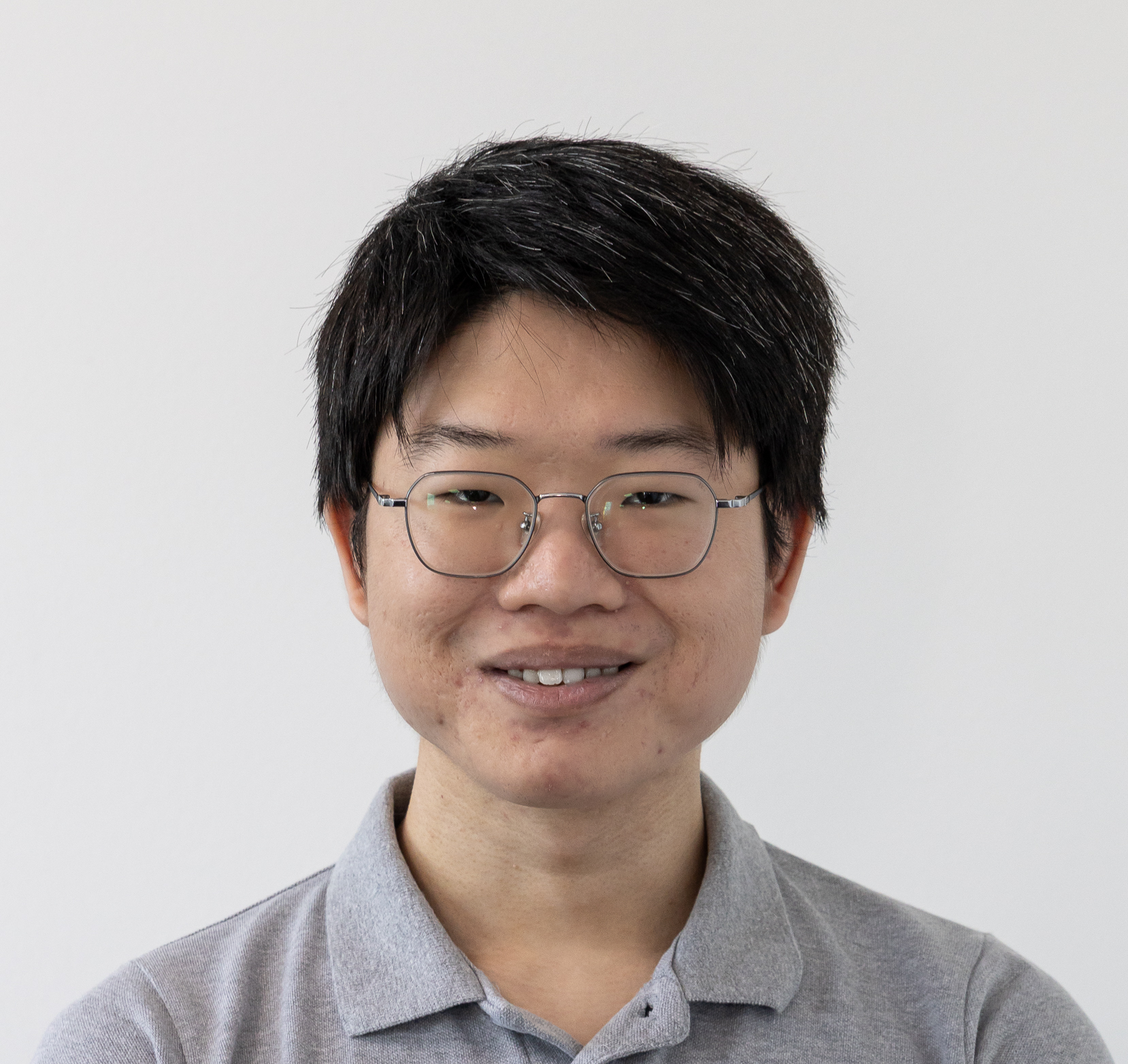
Mr KOAY Yong Zhuang
Full Stack Developer, ASEAN & Korea, KyndrylAs AI coding agents transition from simple autocompletes to autonomous partners, the role of the developer is undergoing a historic shift. Code generation is becoming a commodity — the true engineering bottleneck is no longer how to write code, but what to build and why it matters. Designed for software developers, tech leads, and architects, this workshop uses live demonstrations and hands-on practicals to introduce Spec-Driven Development (SDD), a structured, agent-native Software Development Life Cycle (SDLC) that shifts engineers from an implementation focus to a product and architect mindset. We will explore why applying cookie-cutter design patterns is now the job of coding agents, and how the human developer's value is elevated to empathy-driven system design, creative problem solving, and critical analysis. Working on your own laptop equipped with a coding agent (e.g. Codex/Copilot, Antigravity, or Claude), you will learn to write specs and direct agents from planning to validation. What You'll Learn & Practice 1. The Mindset Shift (Engineering to Product) — Transition from solving implementation syntax (the how) to defining strategic system boundaries and business requirements (the what). 2. From Asking "How" to Asking "Why" — Learn how to frame intent-driven specs by probing underlying user needs, data flow, and product constraints, rather than designing code structures first. 3. Empathy & Design Thinking — Understand how poorly defined user needs result in technically perfect but useless features, and learn to embed user-centric design directly into specifications. 4. Critical & Creative Thinking — Critically audit agent-generated architectures and identify architectural hallucinations before they become costly mistakes. 5. The 5-Phase SDD Lifecycle in Practice — Step-by-step execution of a human-in-the-loop lifecycle, from Planning and ADRs through Spec Commits, PAV/UAT validation, to Squash & Merge. Walk away with a practical framework and sample agent configurations (AGENTS.md) to scale your development velocity while maintaining control over software quality. Who should attend: Software Developers, Tech Leads and Architects. Product managers with some coding backgrounds are also welcome. Prerequisites: Entry-level Developer. Software requirements: a. Integrated Development Editor (IDE), e.g. VSCode, GenAI CLI, e.g. Codex, Antigravity CLI, Claude CLI. b. Git account

Mr CHAN Chi-Loong
Chief Product Officer, Genue
Dr Raymond CHAN
Chief Executive Officer and Co-Founder, Genue
Ms Jasmin LAU

Mr GOH Wei Boon
Chief Executive, GovTech SingaporeThe Internet was built for people. But in May 2026, bot traffic surpassed human traffic for the first time—a milestone that signals a profound shift in how information is discovered, work gets done, and businesses create value. We are entering the agentic Internet: a world where non-human actors do not just crawl, scrape, or attack websites, but increasingly transact, recommend, negotiate, and make decisions on behalf of people and organizations. For businesses, that shift creates enormous opportunity—and real risk. Bots are no longer simply a nuisance or a security threat. Systems designed around a human on the other end now face new questions. How do you identify software acting on someone’s behalf? What should it be allowed to do? Who is accountable when it acts? And how does the economic model of the open web hold up when the visitor isn’t a person? Michelle Zatlyn, Co-founder and President of Cloudflare, will share what roughly 20% of the world’s web traffic reveals: how quickly this transition is happening, what it means for the teams building the next generation of digital experiences, and why the choices being made today will shape the Internet we all rely on.

Ms Michelle ZATLYN
Co-founder, President & Co-chair, CloudflareSynopsis will be available soon.

Mr Shay BANON
Co-founder and Chief Technology Officer, ElasticAs AI places new demands on digital infrastructure, organisations face a growing challenge: how do we deliver the performance required for increasingly complex workloads while remaining secure, resilient, sustainable, and responsibly governed? This panel explores how these priorities can be balanced in practice, from engineering resilience and compliance into systems by design to managing real-world operational risks and strengthening resilience across increasingly interconnected ecosystems.
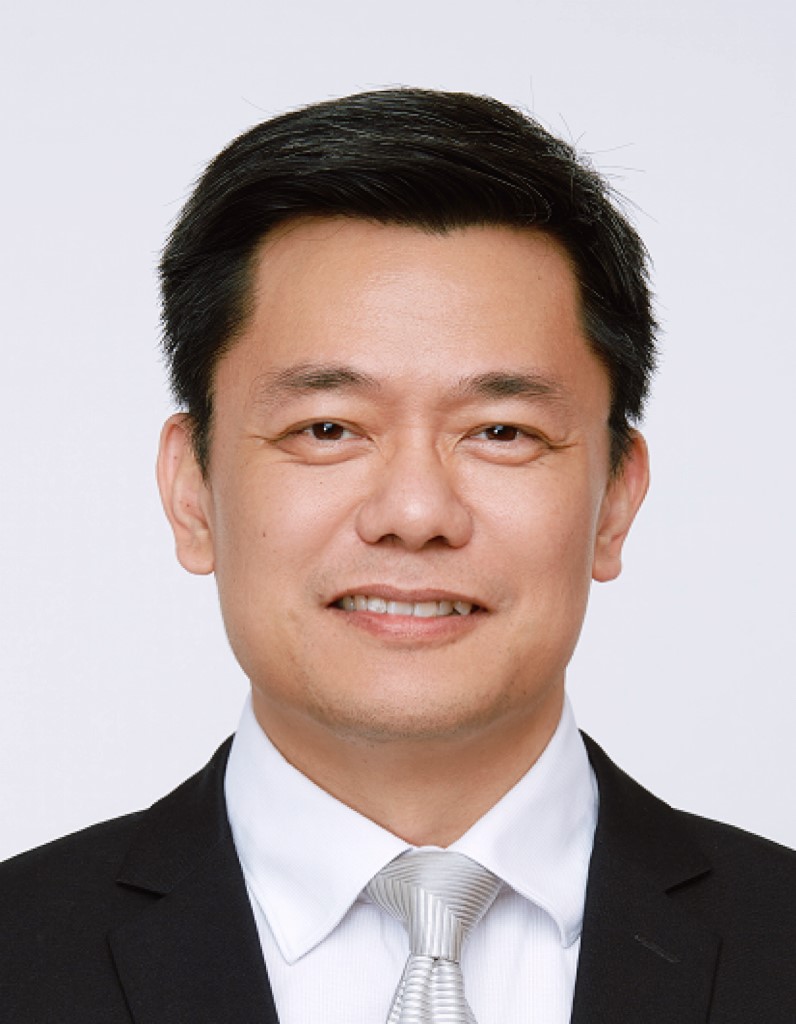
Mr David FOO
Deputy Chief Executive, Maritime and Port Authority of Singapore
Mr Florian TURSKY
Managing Director, Global GovTech CentreMs Michelle ZATLYN
Co-founder, President & Co-chair, CloudflareMr Shay BANON
Co-founder and Chief Technology Officer, Elastic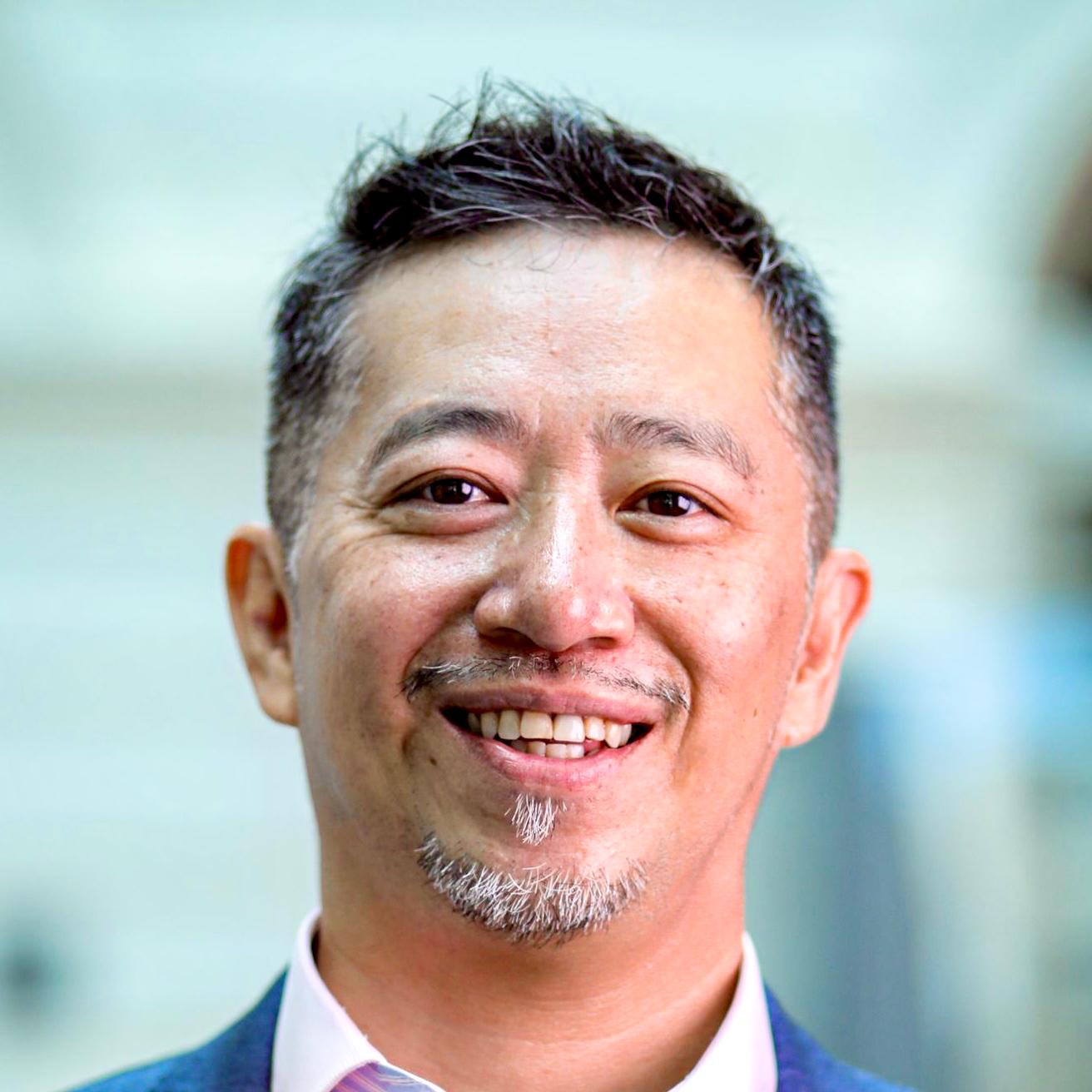
Mr Wen HUANG
In this 15-minute lightning talk, we explore MAS's journey from traditional VM-based environments to a sandboxed Cloud Development Environment (CDE) on the Government Commercial Cloud (GCC), and how AI is now woven into every layer of the developer experience. Through SHIP-HATS, MAS migrated from on-premise Bitbucket to a centralized GitLab instance, embedding SonarQube and SonaType software supply chain tools to left-shift DevSecOps directly to the development stage. The MAS Developer Workspace lets developers spin up isolated dev boxes in seconds across five languages (C#, Java, Python, TypeScript, JavaScript), with monthly base image updates eliminating runtime inconsistencies. At the AI layer, the MAS AI Gateway assigns every developer a dedicated virtual key - unlocking seamless, compliant access to AWS Bedrock and GovTech Platform AI, with centralised MCP server management that amplifies developers' AI coding capability. Claude Code comes preinstalled with an agent security harness: guardrails and security hooks that prevent sensitive data from reaching LLMs. Developers further benefit from Anthropic's preinstalled Agent Skills and the MAS Agent Skills Marketplace, an inner-source platform for sharing purpose-built skills, fueling use cases from software development to document authoring. Key Features of the Talk: • Sandboxed CDE on GCC: Rapid workspace spin-ups, multi-language support, and monthly image updates for consistent, cloud-preserved dev environments. • Left-Shifting DevSecOps: Migrating to SHIP-HATS (GitLab) and embedding SonarQube and SonaType tools at the development stage. • Secure AI Agents with Claude Code: Agent security harness with guardrails and hooks, plus Anthropic Skills and the inner-source MAS Agent Skills Marketplace. • AI Gateway & MCP Governance: Centralized virtual keys, Agent Skills, MCP servers, and full observability across GovTech Platform AI and AWS Bedrock.

Mr Ron ZHONG
Deputy Director and Senior Solution Architect, Monetary Authority of SingaporeAgentic interactions will become an increasingly important consideration in the government services we create. The main focus at the moment is on building AI capability to drive greater productivity, but we are also seeing agents acting on behalf of citizens and the need for creating our own agents to support those transactions. How do we design for the world of M2M experiences in the Singapore Government context? Are human-centred design principles still relevant in a world of agentic interactions? This talk will explore several themes including: • From user journey to user agent journey • From friction removal to friction management • From human-in-the-loop to the human-centred loop

Mr James Theodore (Ted) KILIAN
PDO Design Lead, GovTech SingaporeGovernment has spent decades in building more systems, more environments, and more exceptions. Yet the engineering operators and agencies continue to experience unnecessary complexity. The future of government hosting isn’t more infrastructure – It will be shared, secure and opinionated platforms that provide consistent experiences across classification & sensitivity while reducing operation burden and total cost of ownership. The talk will be sharing our position in modernization as organizational or even industry transformation, not merely a technology refresh.

Mr Hudson LEE
Deputy Director and Cloud Programme Product Lead, GovTech SingaporeI built a Spotify clone called Angular Spotify, mostly because I wanted something that could play Mandopop while I work. It has synced lyrics, so the lyrics scroll along with the song. The problem is, I still cannot sing along. I know the melody, but I read Chinese characters too slowly to keep up. I wanted pinyin under each line. The obvious way to do this is to send every line to an API and convert it. But that means a network request for every line, sending the lyrics out of the browser, and paying more as usage grows. For a hobby project, that felt like a lot. Chrome now has Gemini Nano running directly in the browser, so I decided to try the built-in AI APIs instead. When a Chinese song plays, the Language Detector API detects the lyrics as Chinese, then the Prompt API converts each line into tone-marked pinyin. The pinyin is shown alongside the synced lyrics. No server, no API key, and it even works with WiFi turned off. The actual implementation is just a few lines of JavaScript. In 10 minutes, I will build this feature live, step by step, in the actual app. You will see how the built-in AI APIs work, where they still have limitations, and how the same approach can also be used for things like translation, summaries, and comment moderation. You can take the code and try it in your own project after the conference.
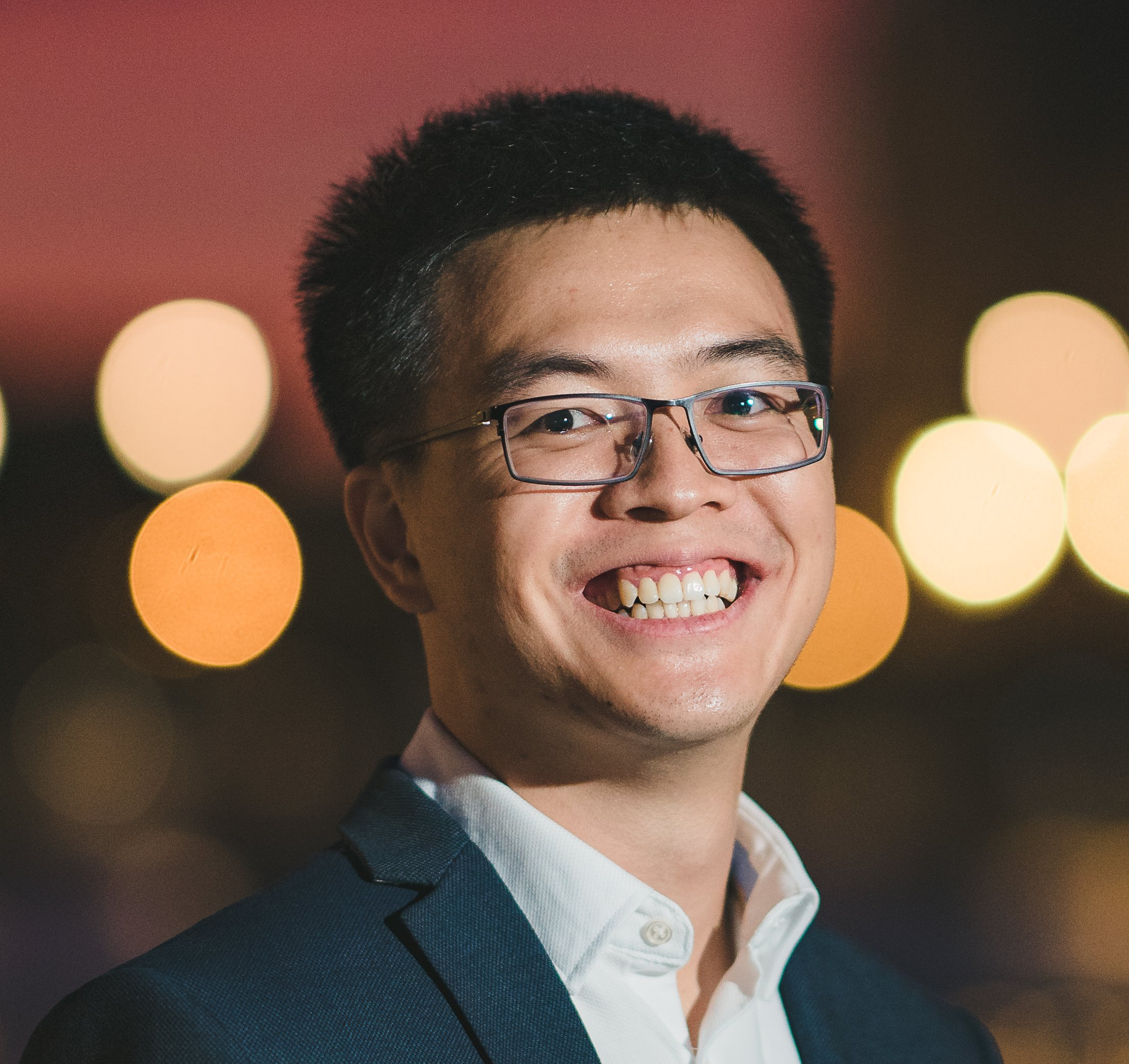
Mr Trung VO
Staff Software Engineer, AscendaAs Mark Carney told Davos 2026, ""great powers have begun using economic integration as weapons, supply chains as vulnerabilities to be exploited."" Drone strikes on hyperscaler data centres in the Gulf disrupted regional banking overnight. Geopolitical risk shapes how governments design digital infrastructure. The session draws on real-world public sector examples to show openness as operational strategy, not ideology For public sector technology leaders the paradox is structural: the stacks that optimise efficiency including hyperscale cloud, SaaS frontier AI and vertically integrated solution create exactly the concentration risk geopolitical volatility exploits. The question is not whether to build resilience, but which components offer the best return. Governments frame digital sovereignty across four dimensions: data, technology, operations, and assurance. While data sovereignty is well understood care of GDPR the others are evolving at the confluence of Gen AI and the disrupted word: Technology and software supply chain. Single-vendor AI and cloud dependencies are geopolitical risks as well as procurement ones. This creates challenges on build vs buy, hyperscaler vs sovereign, closed vs open source. Providing the foundation for consistency, particularly in the software supply chain becomes key. Consistent control plane. Kubernetes and containers have delivered consistent compute portability across vendors for a decade. For AI, the question is which abstractions governments must control to stay flexible across on-premise, sovereign cloud, and hyperscale. As AI accelerates adversarial threats, cloud-native pipelines with embedded security make high-velocity deployment a resilience capability. Cryptographic assurance. Globally we are seeing regulation such as the EU Cyber Resilience Act mandate software bills of materials, vulnerability disclosure, and demonstrable security by design. Signing, attestation, and machine-readable Bills of Materials make compliance evidence tamper-evident and auditable, reducing overhead. For open systems, the CRA is an accelerant; for closed ones, structural debt.

Dr Chris BUTLER
Senior Principal Chief Architect, Red HatThe rapid evolution of AI models, accelerated by Anthropic's Mythos, marks a fundamental shift in how vulnerabilities are discovered, weaponised, and exploited. What was once a predictable patch cycle is rapidly collapsing, as the window between disclosure and exploitation shrinks to near zero. The race is no longer against time. It is against machines! This session takes a practitioner's view on whether this is the new normal. It explores what happens when AI can continuously discover, test, and weaponise vulnerabilities faster than organisations can respond, and what this means for security architecture, patching strategies, and resilience going forward. 1. The end of traditional patching Move beyond scheduled cycles to real-time mitigation, automated patch deployment, and AI-powered conformance testing. 2. Augmenting defense in depth Deploy AI-driven detection, automated response, and pre-emptive controls to operate at attacker speed. 3. Rethinking architecture Design for delayed patching through containment, segmentation, and strict control of blast radius 4. Realigning risk AI is shrinking the vulnerability lifecycle while end-of-life risks surge. Rethink risk prioritization and move faster on validation, remediation, and recovery.
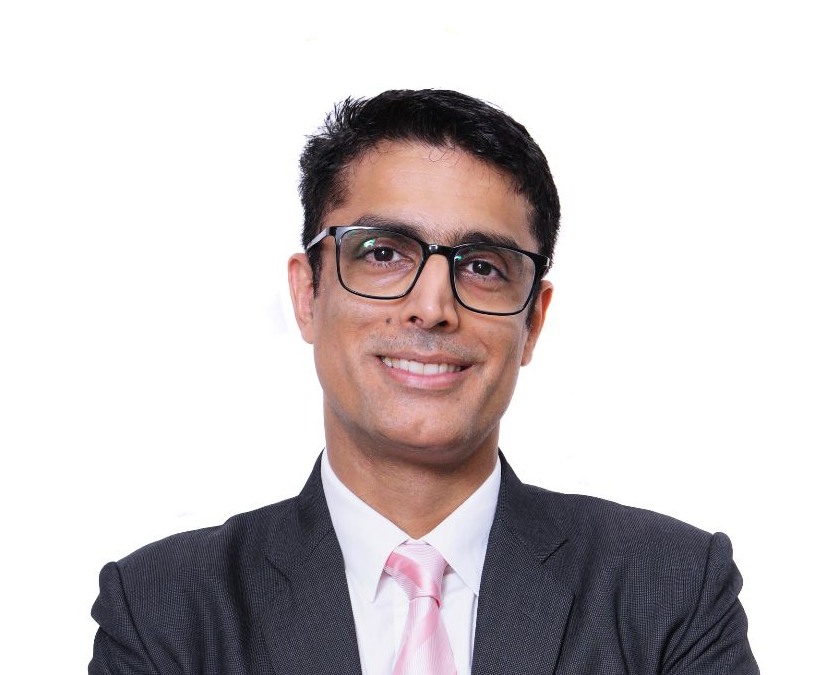
Dr Kunal SEHGAL
CxO Advisor, CiscoSpeed of enterprise technology is inversely proportional to the problem it tries to solve. This talk explores how intent-driven development, vibe coding, and domain-specific AI helps to keep pace with the problems and is a real solution and not an additional headache. We put humans where they need to be: people who understand the domain, the architecture, the constraints, and the prompts needed to shape useful software quickly. The talk will share internal projects we have been building: a call centre productivity tool that helps managers support human agents close to real time; a tender analysis system that identifies requirements and routes tasks to the right teams; a grants automation tool that ingests templates, organises submissions, and keeps folders audit-ready; and an OSINT-based “god’s eye” risk platform to help assurance teams explore threats to assets and business operations. What makes it possible: we shrink capable LLMs down (via Multiverse Computing's compression) to run fully offline on a Mac Studio. No internet, no leaks — the only reason any of this is allowed near classified work. This is trench-proven, battle-hardened experience from trying to build useful systems before requirements rot, budgets fossilise, and users lose faith. No consulting framework. No generic productivity gospel. Just lessons from building fast, staying secure, and making AI tools that users actually want.

Mr Michal POLANOWSKI
Head of Generative AI, Group Technology Office, ST Engineering
Mr Yitch CHENG
AI Innovation Lead, ST EngineeringAs AI applications become more widely deployed, teams need ways to safeguard systems against unsafe, inappropriate, or policy-violating behaviour. Generic moderation tools can be useful, but real-world applications often require guardrails that are adapted to specific risks, use cases, and contexts. This lightning talk explores how teams can build custom guardrails that are aligned to their application context and policy requirements. It will cover how teams can move from policy intent to guardrails that can be deployed and used at runtime, including how to translate risk categories into practical checks, develop contextualised datasets and models, and test whether the application behaves according to the intended policy. Participants will also learn about the trade-offs involved in applying and deploying guardrails, and leave with a clearer understanding of how to build custom guardrails for their applications, so that AI systems can be designed, tested, and deployed responsibly.

Ms GOH Jia Yi
Data Scientist, GovTech SingaporeBuilding an AI demo is one thing. Running a public service people can trust is the real test. Forrester’s Paul Martin explores how AI-native cloud is reshaping software development and bringing agents into everyday workflows. Discover how context engineering, clear operational boundaries and continuous evaluation can turn experiments into dependable services. For Singapore’s development community, the opportunity is faster delivery, less repetitive work and AI-enabled public services that earn citizens’ trust.

Mr Paul MARTIN
Executive Partner, ForresterMost data-driven organisations will recognise these frustrations: siloed datasets duplicated across teams, slow manual workflows that delay access to data, and staff who struggle to discover what data exists. As AI and analytics demands grow, the cost of these problems becomes harder to ignore - slower policy analysis, delayed service delivery, and missed opportunities to act on insight. This talk shares how the Housing & Development Board (HDB) approached these challenges through ARK (Analytical Repository of Knowledge), a data platform that centralises and productises data around business domains. Rather than letting each team build their own pipelines, common data assets are made reusable and discoverable through a single pane of glass: One platform where users can find, request and access data. Underpinning this is a Lakehouse medallion architecture, where raw data is progressively refined into clean, trusted, and business-ready data products. The data catalogue is kept current with automated metadata updates, and a cloud-native infrastructure allows the platform to scale flexibly with demand, with versatile solution patterns to integrate across systems. Data quality sits at the heart of ARK's design. As data flows through the pipelines, automated quality checks built in accordance with IM requirements ensure only data meeting defined thresholds is exposed to users. This self-sustaining quality loop means data consumers can trust what they request, without producers doing any manual verification. Beyond HDB, ARK has already been adopted by MND's Housing Policy and Research teams, with longer-term ambitions to serve the wider Whole of Government analytics community. Attendees will hear honest reflections on what has worked, what remains challenging, and practical lessons on building data infrastructure that grows with an organisation's analytical ambitions. The approach might offer a replicable reference for any agency on a similar journey.
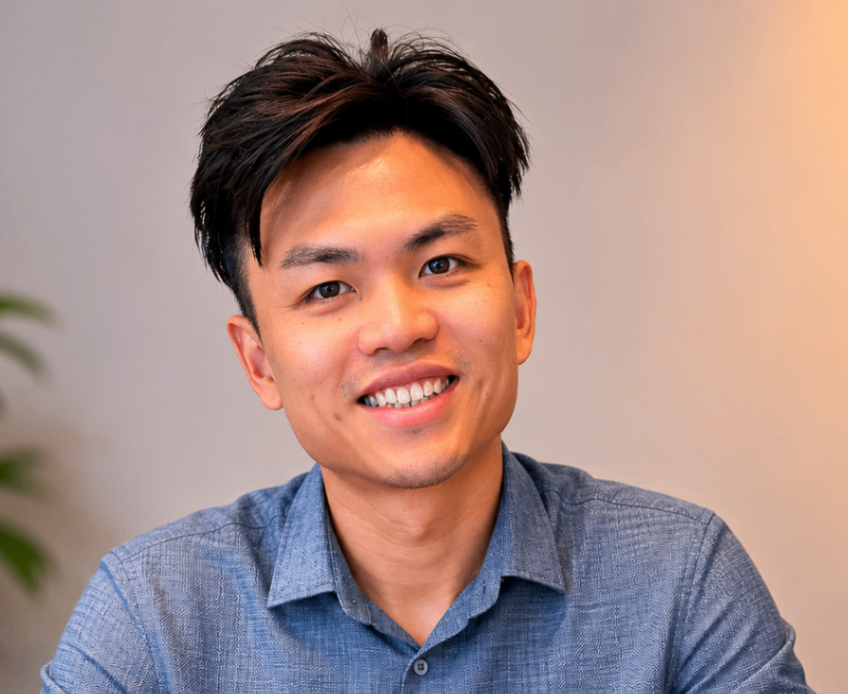
Mr Lewis LE
Senior Data Engineer, Housing & Development BoardIn this talk, DX Distinguished Scientist Brian Houck introduces CAFE(S), a framework for understanding context quality across five dimensions: Clarity, Actionability, Fidelity, Efficiency, and Security. He'll show why context has become a new engineering bottleneck, the common failure patterns organisations encounter as AI scales, and practical steps individuals, teams and organisations can take to build healthier human-agent systems. He'll also introduce Agent Experience (AX) as an emerging approach for measuring how agents actually experience the context they're given.

Mr Brian HOUCK
Distinguished Scientist, Atlassian DXThe session will show how teams can go beyond basic prompting by using AI agents, reusable AI skills, and integrated developer tools to turn intent into structured, review-ready outputs. We will cover how AI can support common engineering activities such as generating user stories, drafting solution designs, accelerating code generation, reviewing pull requests, creating test cases, preparing release notes, and supporting incident triage. A key focus will be on how reusable AI skills can standardise best practices across teams, improve consistency, and reduce repeated manual effort. The session will also highlight how agents and skills work together: agents decide what needs to be done, while skills guide how the work should be completed.

Mr Nick BAO
Head of Product Strategy and Presales Director, AvePoint Singapore Pte. LtdMost AI agent demos run on powerful cloud models with unlimited context. But what does it take to build an agent that works on a user's own machine, with no strong hardware required? This talk shares the hard-won lessons from building a local OS automation agent and the design patterns that made a sub-1B model reliable enough for real desktop interaction, with the aim of leaving the audience with a better direction on applications of AI models other than just scaling the size of the model. Three core lessons will be covered: 1. Context is everything at small scale. A 1B model can reliably call desktop tools if and only if you give it the right structured state: foreground window, pruned UI element tree, cursor position, compressed to under 800 tokens per turn. 2. On-device fine-tuning is tractable. Every failed tool call, paired with the agent's subsequent recovery action, is a supervised training example. 3. Safe-by-design is an architecture decision, not a feature. Confirmation gates before irreversible actions, bounded tool-call budgets, and observe-act-verify loops allow AI agents to run for tech-savvy user unsupervised.

Mr Jason Matthew SUHARI
Founder and Chief Executive Officer, FluentThe next generation of AI won't wait for instructions. It plans, executes, and adapts. Explore the emerging "agentic stack" powering autonomous workflows: from foundation models and tool-use frameworks to memory, reasoning, and self-correction. Drawing on lessons from Amazon's own experience, this session examines the engineering, guardrails, and accountability mechanisms needed to deploy autonomous AI responsibly, balancing speed and autonomy with oversight and explainability, and how teams themselves are evolving along the way.

Mr Vishal SHARMA
Vice President, Amazon Artificial General Intelligence, Information and Multimodal AI Experience, AmazonMost engineering teams have already experimented with AI tools. The question is no longer whether AI is useful - it's why it works brilliantly for some teams and feels like a fancy autocomplete for others. This talk argues that the difference isn't the model. It's the context layer. Out of the box, AI is genuinely helpful for boilerplate work: code stubs, draft emails, summaries, first-pass ideas. But it doesn't know your codebase, your customers, your data, or how your team ships. The answers feel generic. Sometimes you could have typed them yourself. That's where the skepticism comes from - and honestly, that skepticism is fair. The shift happens when AI has your context: your engineering conventions, your repos, your schemas, your taxonomy, your team's writing voice. That's when it stops feeling like an intern who just joined and starts behaving like a teammate who's been around for two years. This talk is about how to build that context layer, why there's no shortcut to it, and why the investment compounds in ways that boilerplate AI use never will. What the audience will take away: • A clear mental model for why ""vanilla AI"" underdelivers in engineering contexts • A practical framework for identifying and encoding your team's context (conventions, schemas, data, language) • A domain-by-domain approach to rolling out context-aware AI rather than trying to boil the ocean • Real examples of where context-rich AI is already producing leverage - in data workflows and engineering delivery Who this is for: Engineering managers, tech leads, and senior engineers who've run AI pilots, hit a ceiling, and are trying to figure out what comes next. Also relevant for anyone tasked with making an AI adoption strategy more than a slide deck. Why this talk, why now: The ""is AI useful?"" debate is over. The new conversation in engineering orgs is about leverage: how do you move from AI as a productivity toy to AI as a force multiplier embedded in how your team actually works? This talk offers a practitioner's answer, grounded in real implementation - not hype, not theory.

Mr Vipul SODHA
Principal Engineer, Carousell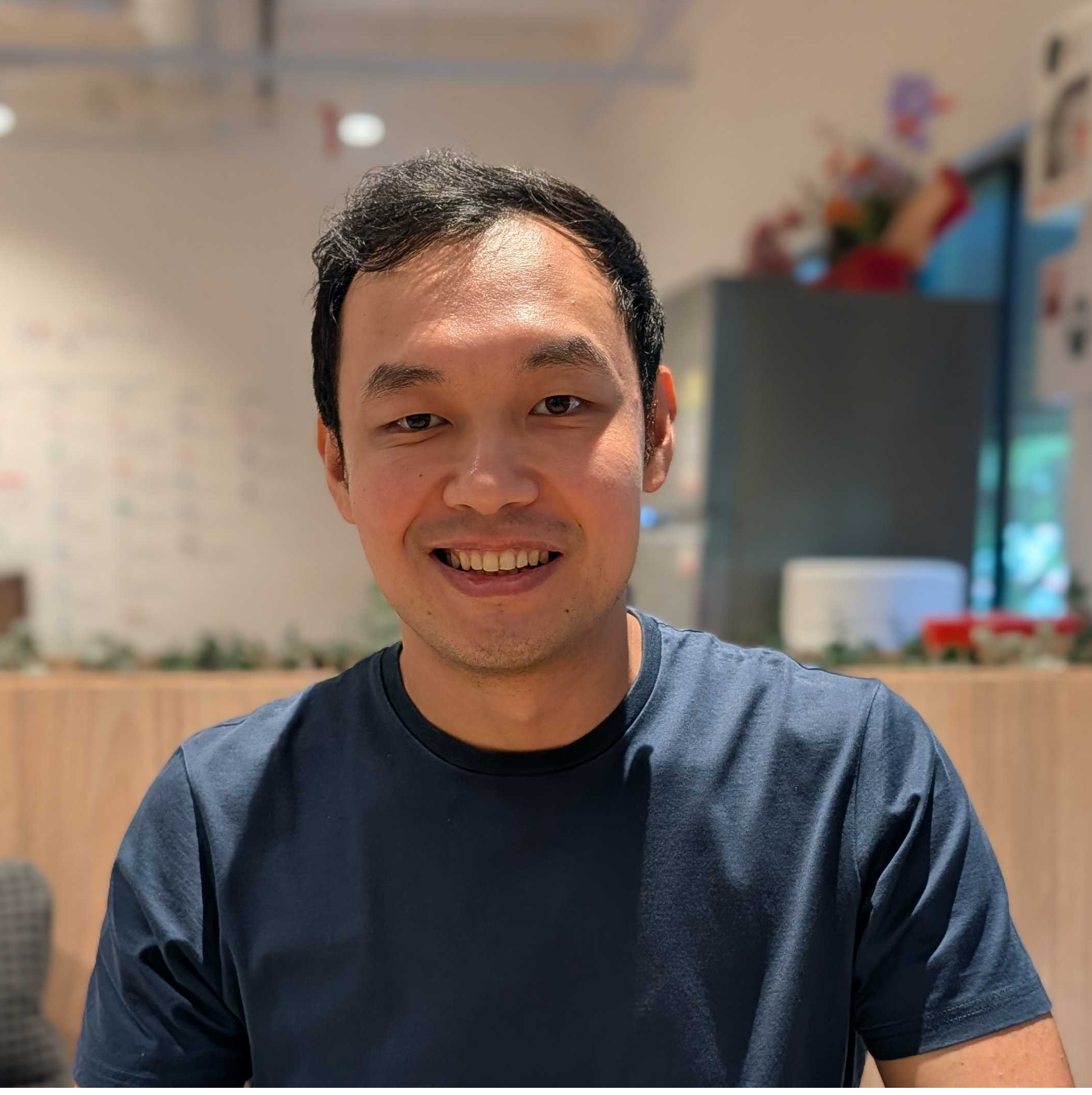
Mr Vladislav KAN
Senior Engineer Manager, CarousellThe path from a successful AI proof-of-concept to a reliable agentic AI system is not straightforward. This talk will provide a retrospective on our journey at DSTA as we moved beyond simple chatbots to architecting agents capable of executing real world workflows. We will move past the hype to share the technical stories of our development including the engineering pivots, the failed evaluation strategies, and the system level innovations such as structured outputs and state managed orchestration that were born out of necessity. By sharing our iterations and the challenges we have yet to solve, we will provide a candid look at what it actually takes to build for the next phase of AI.

Mr Leslie LIM
Head Engineering, C3 Artificial Intelligence, Defence Science and Technology AgencyAs AI agents become active participants in software delivery, development environments must evolve beyond traditional workstations and long-lived virtual machines. Airlift is a secure remote workspace platform built for the Singapore Government ecosystem. Powered by ContainerStack and running on Kubernetes, Airlift provides ephemeral development environments—called Crafts—that can be created on demand by developers and AI agents alike. This lightning talk explores how ephemeral workspaces increase engineering velocity while improving security by encouraging Git-native workflows, reducing configuration drift, and preventing secret exposure during AI-assisted development. Attendees will learn how Airlift integrates with SHIP-HATS and Platform AI to enable software development, where developers and agents can move seamlessly from idea to execution in a secure, governed environment.
Mr Soedarsono
Staff Software Engineer, GovTech SingaporeIntroducing Durable Execution and why this has transformed how Software is built. Some of the largest companies in the world (Netflix, OpenAI, Anthropic, Meta, Stripe) are banking on Temporal to power mission-critical services. https://temporal.io/ Temporal: The Durable Execution Platform Modern applications are no longer simple request-response systems. Every business-critical process—payments, onboarding, claims processing, order fulfilment, fraud checks, AI agents, and customer workflows—spans multiple services, APIs, databases, and human interactions. The challenge is that these systems fail constantly. Networks timeout. APIs become unavailable. Servers crash. Containers are restarted. Cloud services experience transient outages. Humans take hours or days to respond. As a result, engineering teams spend the majority of their time building and maintaining reliability infrastructure: retries, queues, state management, compensation logic, timeouts, checkpoints, recovery mechanisms, and observability. This complexity often becomes larger than the actual business logic itself. Temporal was created to solve this problem. Temporal is a Durable Execution platform that allows developers to write business processes as normal code while Temporal transparently handles failures, retries, state persistence, recovery, and orchestration. With Temporal, applications can continue executing even if the underlying infrastructure fails. If a server crashes while a workflow is waiting for a payment confirmation, a customer approval, or a third-party API response, Temporal automatically restores execution from the exact point where it stopped and continues processing without data loss or manual intervention. This capability is called Durable Execution. Durable Execution fundamentally changes how software is built. Instead of developers writing complex failure-handling logic, they focus on business outcomes while Temporal guarantees reliable execution. Workflows can run for seconds, days, months, or even years while preserving their state and correctness.

Mr Ron TEO
Senior Solutions Architect, TemporalAI is moving beyond chatbots to systems that plan, reason, collaborate and act. This presentation explores the cloud infrastructure required to make agents production-ready—from models, elastic computing and AI-ready data to secure runtimes, memory, orchestration, identity, observability and task-level governance. Real-world success cases across software development, content production, intelligent operations and enterprise services will demonstrate how agents are being deployed reliably at scale. Attendees will gain a practical blueprint for building secure, cost-efficient and continuously improving agentic systems that deliver measurable public and business value.

Dr LI Feifei
Chief Technology Officer, President of International Business, Alibaba CloudMost teams moving LLMs from demos to production at scale hit the same wall: performance and cost break before model quality does. Slow responses, GPU saturation, and unpredictable latency become the real bottlenecks. This talk examines a key architectural decision behind that problem: whether to run inference as a single unified workload or split it into separate stages for input processing and token generation (commonly called disaggregated inference). Based on hands-on experience running both approaches in on-premises environments, we present measured results across time to first token, throughput, and latency under load, along with the operational trade-offs each model introduces. We will cover: • When splitting workloads improves performance and when it adds unnecessary complexity • How GPU compute and memory constraints shape concurrency, latency, and throughput in practice Attendees will leave with a clear framework to evaluate LLM serving architectures and practical guidelines to scale from early prototypes to reliable, high-concurrency production systems.

Mr Balakumar MANICKAM
Principal Architect, AI Engineering, Dell TechnologiesAs organisations scale AI from pilots to production, governance must evolve into a strategic design principle. This talk will explore how developers, data scientists, and technologists can embed governance into their workflows — not as a compliance burden, but as a framework that enables responsible innovation. Drawing on international standards such as ISO/IEC 42001, Singapore’s Model AI Governance Framework, and AI Verify, I will share practical approaches to building guardrails, measuring ROI, and prioritising AI use cases for maximum business value. Key Themes: 1. Responsible AI by Design • How to integrate governance principles into model development pipelines. • Practical tools: documentation, bias checks, explainability, monitoring. • Alignment with ISO 42001 and Singapore’s AI Verify framework. 2. Technical Guardrails • What “guardrails” mean in practice for developers and data scientists. • Examples: adversarial testing, drift monitoring, human‑in‑the‑loop systems. • How governance reduces risk while enabling innovation. 3. Value Prioritisation Framework • A structured approach to selecting AI use cases based on ROI, risk, and impact. • How technologists can use governance to demonstrate business value. 4. Bridging Business and Technology • Strategies that resonate with executives while being actionable for practitioners. • Governance as an enabler: helping technologists build responsibly without slowing them down. Learning Outcomes: Participants will: • Understand how to embed Responsible AI principles into AI systems from design to deployment. • Learn practical guardrails for responsible AI development. • Understand tools to measure ROI and prioritise AI use cases. • See how governance can align technical work with business strategy. This session will demonstrate that governance is not a constraint but a strategic enabler. By combining technical guardrails with business frameworks, it equips technologists to build AI systems that are responsible and scalable.
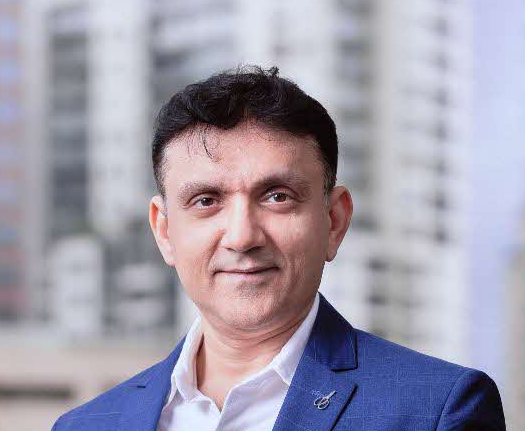
Mr Tarun SAMTANI
Senior Director, Cyber, Data & AI Governance, IndependentShows how AI and product engineering practices can help agencies modernise legacy systems, using NEA's transformation journey as a case study. It explores practical approaches to understanding legacy architectures, AI-led discovery and development, and maintaining operational reliability while transitioning core systems.

Ms WENG Wanyi
Cluster Director, Sustainability & Environment ClusterChief Information Officer, National Environment AgencyMr Wen HUANG
Modernisation efforts often stall under the weight of legacy complexity, fragmented tooling, and limited documentation. This session shares practical lessons from embedding an AI-driven Software Development Lifecycle (AI-SDLC) into large-scale modernisation programmes. We will demonstrate how intent-driven development, powered by AI, can accelerate engineering velocity—from code understanding and refactoring to automated testing and documentation generation. The session will focus on real-world experiences, challenges encountered, and where AI meaningfully delivers impact versus where it requires careful governance. Attendees will walk away with pragmatic insights on integrating AI into engineering workflows, improving developer productivity, and de-risking modernisation initiatives at scale.

Mr Keegan DAVIES
Head of Cloud+Build, SlalomAgent platforms mostly control models through the outer loop: prompts, memory, tools, permissions, and output checks. These mechanisms shape what the model sees and what it is allowed to do. They do not read the internal state that forms during the forward pass. Activation access changes that. It allows a runtime to inspect representations inside the model while an action is being formed. Those representations can become control signals: not just academic curiosities for interpretability researchers, but signals an agent system can use before it acts. This is especially relevant for emotion-like representations. In Claude Sonnet 4.5, Anthropic found internal representations associated with concepts such as calm, fear, and desperation. In controlled agentic settings, these representations affected behaviour, including sycophancy, reward-hacking, preferences, and blackmail. Anthropic calls this functional emotion: emotion-like internal structure with behavioural effects. For agents, functional emotion points to a new design primitive: activation sensing. A platform could monitor whether an agent is entering states associated with pressure, desperation, overconfidence, deference, or risk-seeking. Those signals could inform runtime decisions: require extra verification, restrict a tool call, route to a safer policy, ask for human review, change the planning mode, or apply a bounded activation intervention. The live demo uses an open-model runtime with activation access. During an agent task, the system reads an affect-related representation as the context changes. It shows how the signal moves under pressure and before planned actions. A second example applies a bounded intervention to a concept direction and shows the resulting behavioural shift during inference. Attendees will leave with a model of activation access as a new agentic primitive: a way to sense and use forward-pass representations, including affect-like states, rather than relying only on prompts and external controls.
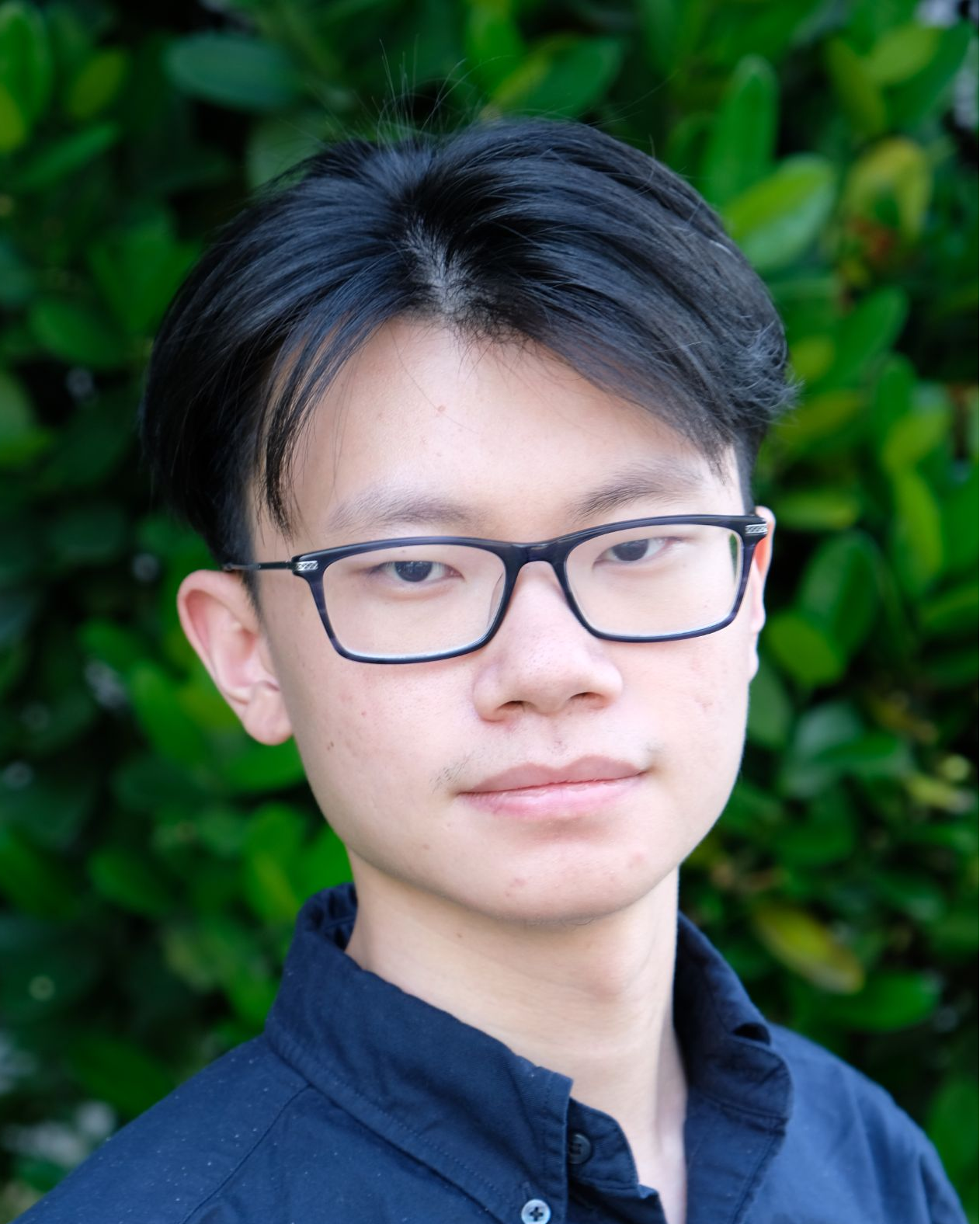
Mr Zacchaeus CHOK
Co-founder, Marymount LabsThe next advantage in software will not come from generating more code; it will come from building trusted platforms and living systems that don't grow old. Mike Sutcliff explores how platform engineering, strategy and responsible AI adoption must work together: creating systems that do not become legacy again, improving the economics of change, and embedding governance, accountability and human judgment into the way intelligent systems are designed and delivered. The result is an approach to building systems that combines speed with resilience, autonomy with oversight, and technical capability with outcomes that matter to the people and organisations.

Mr Mike SUTCLIFF
Chief Executive Officer and Director, Thoughtworks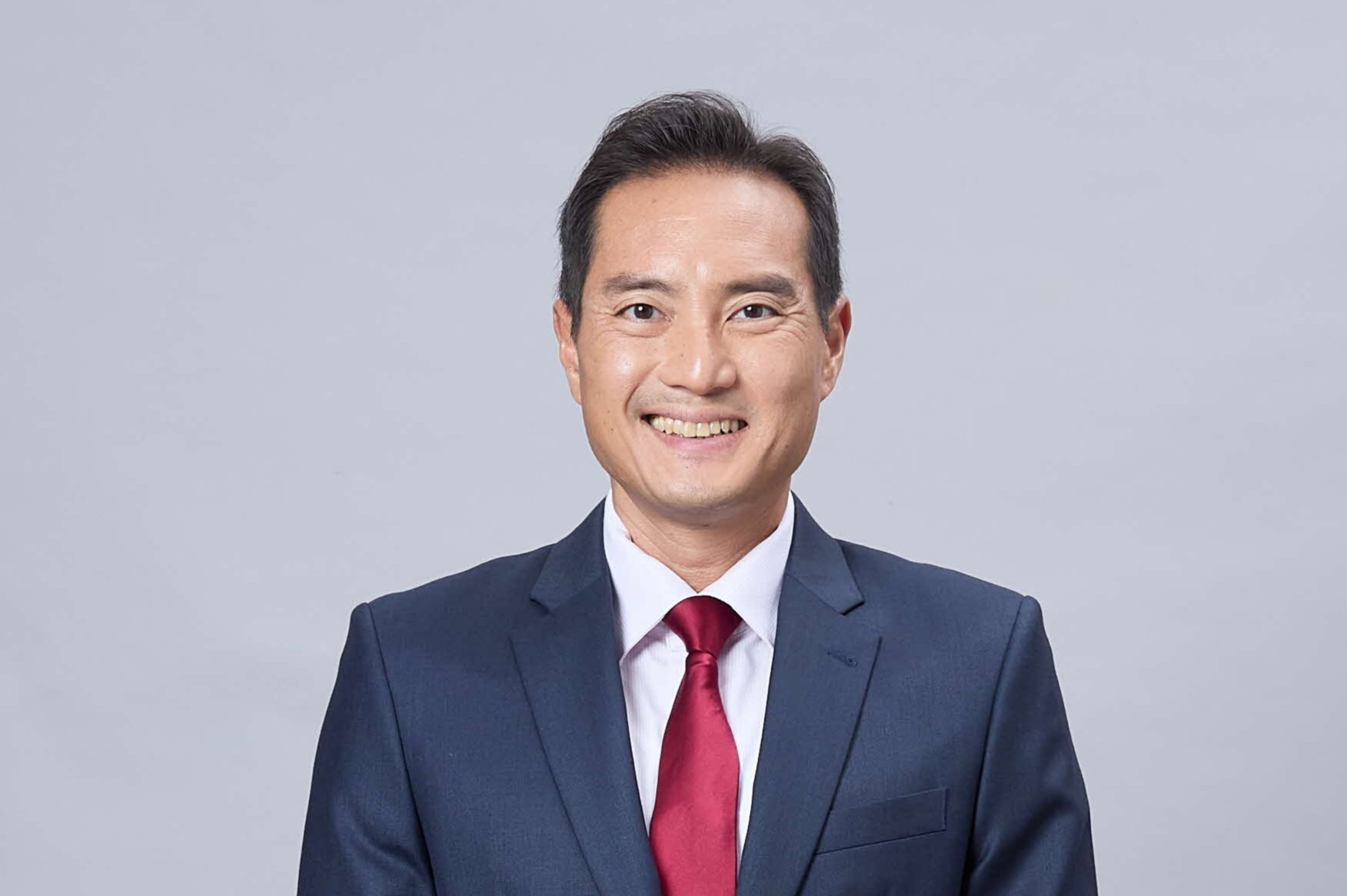
Mr TAN Kiat How

Mr CHANG Sau Sheong
Chief Technology Officer and Deputy Chief Executive (Products), GovTech SingaporeAs enterprises move from AI experimentation to production, success depends on more than choosing the right model. In this keynote, Arsalan Tavakoli-Shiraji, Databricks' Co-founder and SVP of Field Engineering, will explore how a unified, governed data and AI foundation can help organizations connect data, applications, analytics, and AI. He will share a practical vision for reducing architectural complexity, empowering more employees with trusted insights, and building AI applications and agents that deliver measurable business value at enterprise scale.

Mr Arsalan TAVAKOLI-SHIRAJI
Co-Founder and Senior Vice President of Field Engineering, DatabricksSid’s personal story of going founder mode on his osteosarcoma cancer. After standard of care ran out of options, Sid took control doing maximum diagnostics, creating personalised treatments, and doing many treatments in parallel. He is scaling it for other people with the Future of Cancer Care Today initiative and Even One Ventures.

Mr Sid SIJBRANDIJ
Co-founder and Executive Chair, GitLabAs AI agents move from assisting users to reasoning, acting. and coordinating across systems, organisations have an opportunity to rethink more than individual tasks. This panel explores how work, business processes, and services can be redesigned around increasingly autonomous agents, what it takes to make these workflows reliable in production, and where human judgment and accountability should remain.

Mr Aidan GOMEZ
Co-founder and Chief Executive Officer, Cohere
Mr Maxim FATEEV
Co-founder and Chief Technology Officer, TemporalMr Sid SIJBRANDIJ
Co-founder and Executive Chair, GitLab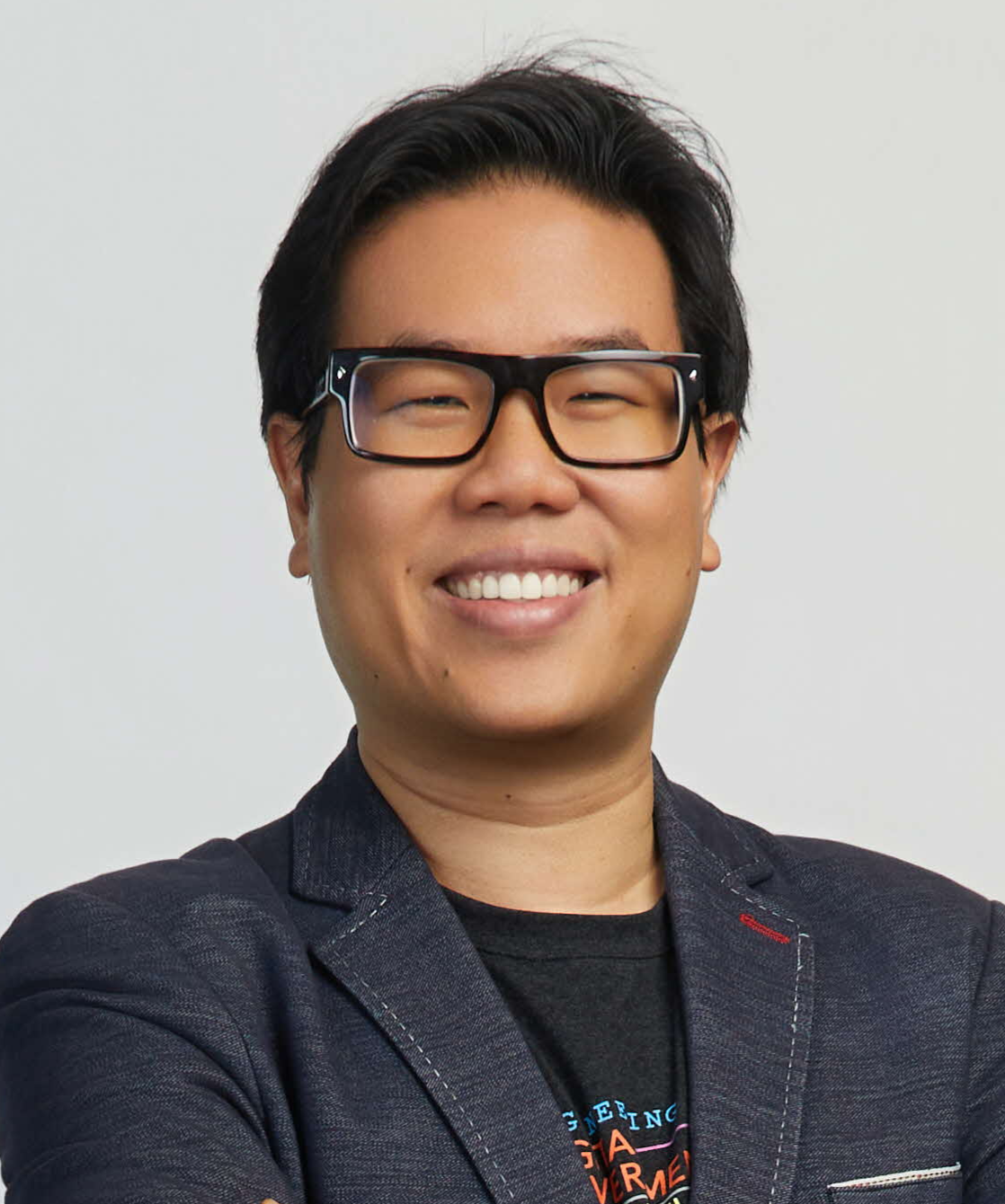
Mr Colin ZHAO
I was a goalkeeper before I was an engineer. Between 1996 & 2001, I played professionally in Germany's Bundesliga and France's Ligue 1. The job, I came to understand, is almost entirely a data problem. You stand still 90% of the match. What you are actually doing is reading the field — where every attacker is, where they were 2 seconds ago, where they are about to be, which one drifts left when tired, which one fakes inside before going outside. The reflexes are the easy part. The reading is the job. When you concede a goal, it is almost never because you were too slow. It is because the information you acted on was wrong, late, or incomplete. After football, I spent 25 years building technology businesses — from SAP consulting to generative software development to content platforms — where I designed and deployed agent fleets to automate workflows and increase both efficiency and quality at scale. Most recently, I built a fully autonomous multi-agent AI creative agency: a team of specialist agents that take a brief and ship finished work end-to-end with no human in the loop. The models were never the bottleneck. The data was. Every interesting failure mode mapped to one of three issues. This talk is the story of that build and the three data lessons it forced me to learn the hard way: 1. Schema rigidity is where agentic systems stop. Agents invent data shapes your business never designed for — decisions, scores, traces, memory, embeddings. Every new agent type forces a migration unless the layer is flexible by default. 2. Operational state, not analytical state. In a multi-agent system, when one agent writes, the next has to see it immediately. ETL is two-second-old data at best. A goalkeeper acting on where the striker was 2 seconds ago concedes. Your agents are conceding goals you cannot see. 3. Vector retrieval is a search problem, not a state problem. Most teams confuse ""we have a vector DB"" with ""we have a data layer."" They are not the same — and the moment your underlying state changes, every write becomes an embedding job most architectures are not designed for. Attendees will leave with a clear thesis to apply to their own agent designs (the bottleneck is rarely the model), three concrete data patterns drawn from a working production system, and a short audit they can run against their own stack on Monday morning. The talk is vendor-neutral. The patterns apply regardless of which database, model provider, or orchestration framework you choose.

Mr Thorsten WALTHER
Managing Director, CxO Advisory, MongoDBAt GovTech Anti-Scam Products (GASP), we believe security should be a non-excludable public good — embedded in the backend, invisible to users, and equitable by default. Rather than asking citizens to stay vigilant, we target critical convergent points like scam websites and phone lines, where the Singapore Government holds a structural defender's advantage. This talk traces GASP's journey from manual operations to an autonomous, AI-driven anti-scam ecosystem. Our flagship system, rMSE, evaluates over 600,000 URLs daily at >90% precision and recall — automatically disrupting high-confidence threats with no human review required. Time-to-disruption has fallen from hours to minutes, contributing to a 27.6% reduction in scam cases in Singapore in 2025. But as we close one door, scammers force open another. When syndicates pivoted to Government Official Impersonation Scams via phone calls, we partnered with IMDA to build the technical infrastructure behind the national SIM card registration limit — constraining supply and applying advanced analytics to detect suspicious sign-ups before harm occurs. We close with an exclusive live launch: the beta release of a new Android app — no spoilers, join us to find out more!
Mr Mark CHEN
Director, GovTech SingaporeSingpass serves millions of users, but support tickets reveal only the experiences people choose to report. This talk shares how Singpass’s Voice of the User programme brings together support trends, user feedback, sentiment, search behaviour and system errors to identify friction that might otherwise remain hidden. Through practical examples, Sophie Syed shows how these signals have informed product, policy and operational improvements, reducing avoidable support demand and making services easier for citizens to use.

Ms Sophie SYED
Assistant Director, Product Operations, Singpass, GovTech SingaporeThe problem with physical documents: they can be forged, over-share personal data, and cannot be verified remotely. For Singapore as a digital first nation with robust systems like Singpass, there still presents some gaps for in-person verification. Key problem today is the visual paradox where the digital NRIC represented in app's verification process is in fact still manual and requires the staff to ensure that the digital NRIC presented matches the person. Beyond insecurities existing for in-person verification Singpass has been operating in a closed loop identity system that limits scaling. Centralised onboarding structure, limited cross border recognition due to proprietary implementation (Singapore-specific solution). What are Verifiable Digital Credentials: cryptographically verifiable digital representations of identity attributes or credentials that can be securely stored in a digital wallet and presented to relying parties. Credentials bound to the holder's device, selectively disclosable, verifiable without contacting the issuer (privacy preserving), and usable offline. Why mDocs: They are standardised (ISO-based) and operationally deployable today They support offline and in-person verification They are gaining adoption across public and private sector use cases globally (example of US, Japan, Philippines, EU). Singpass as sovereign issuer: why having a government-backed trusted issuer is the prerequisite for ecosystem adoption, and what Singpass's role is in the VC trust chain — from issuing to managing revocation. First domestic use cases: age verification at point of sale, identity verification before accessing gov / bank services. What the verifier experience looks like and how RPs consume these credentials without a new API stack. Trust governance: who decides which credentials are trusted, how revocation works, and what happens when a credential is invalidated in the field. The governance model is as important as the cryptography. Future ambitions: Professional credential verification (licences, permits), mobile driving licenses Cross-border pilots and what the path to globally recognised Singapore digital credentials requires — bilateral trust frameworks, interoperability with EUDI Wallet, and the APEC digital trade facilitation agenda.

Ms Elizabeth LIM
Senior Product Manager, GovTech SingaporeDigital transformation is not just about deploying new systems or adopting AI. It requires organisations to rethink how they work, make decisions and deliver value. In this session, MOE’s Digital Excellence & Products Division (DXD) will share how we are shaping the culture, strategy and organisational capabilities needed to accelerate transformation in education. We will discuss MOE’s shift towards more product-led, user-centred and data-informed ways of working — bringing policy, operations, technology and users together around shared outcomes. We will also explore how digital, data and AI are reshaping organisational structures, workforce capabilities, leadership practices and the design of work. Drawing on MOE’s experience, the session will highlight practical lessons in strengthening ownership and collaboration, enabling experimentation, building multidisciplinary capabilities, and balancing innovation with trust, governance and operational realities. The session offers reflections on what it takes to move beyond isolated digital initiatives and products, and build an organisation that can continuously adapt and deliver better outcomes for education.
Most AI pilots do not fail because the model is weak. They fail because the organisation around the model is not ready to learn. This 15-minute lightning talk presents empirical evidence from Bulgaria, Croatia, Romania, and Bulgarian schools, covering more than 15,500 respondents. The pattern is consistent: people are curious, motivated, and asking for AI training, while organisations often lack AI vision, internal rules, ethical guidance, dedicated budgets, leadership communication, and practical learning mechanisms. The talk introduces the concept of asymmetric readiness: the gap between individual willingness and organisational capacity. This gap appears across governments, schools, and companies. Teams experiment with AI tools, but workflows remain unchanged. Leaders announce AI strategies, but accountability, risk ownership, feedback loops, and post-deployment learning remain unclear. As a result, AI becomes a faster layer on top of old routines rather than a driver of real transformation. The session argues that organisations should move from automation-first thinking to shared intelligence. Shared intelligence means connecting human judgment, data, workflows, AI systems, accountability, and organisational learning so that decisions become better, not merely faster. This matters for public administration, but also for any organisation trying to move from isolated AI pilots to meaningful adoption. The practical message is direct. Before asking which AI tool to buy, organisations should ask whether they can learn with it. The future belongs not to the organisations that automate first, but to the organisations that learn fastest.

Mr Pavel IVANOV
Executive Director, Institute of Public Administration, Council of Ministers of Bulgaria, Republic of BulgariaVisiting Professor and PhD Candidate, Sofia University St. Kliment OhridskiMost AI projects fail not because of the model, but because the data underneath is broken. When the same entity - a citizen, a customer, a business shows up across many systems as fragmented, inconsistent, unjoinable records, no model or service on top can be trusted. And the cost is quiet: nothing breaks, but the joined-up, anticipatory services you like to build are hard to get off the ground. This talk reframes data quality as a system design problem rather than a cleanup task. Drawing on real world experience building trusted data foundations, it covers how to assess where your data actually stands, how to ""shift left"" and design systems so bad data can't enter at the source, and when post-hoc repair is the right call. It closes on what a trusted foundation unlocks: services that move from reactive to anticipatory, reaching people before they have to ask, and why on shared infrastructure, getting this right is a matter of public good. Attendees will leave with a practical way to think about data foundation work as a prerequisite instead of afterthought to AI/ML success.

Ms LOW Weixin
Tech Lead and Senior Engineer, IndependentPhishing kits (phishkits) offer great insight into the latest techniques used by scammers, but analysing them at scale is an operational bottleneck. This lightning talk covers how we leverage AI to ingest and process phishkit data at scale. We'll deep-dive into how automated OSINT analysis can uncover the origins of these kits and attribute them to their operators, extracting actionable insights to drive proactive, automated disruptions before more financial harm is done.

Mr YIP Jian Ming
Technical Lead, GovTech SingaporeWhat if your conference wasn’t just an event to organise, but a product to build? For nine years, we’ve been experimenting, tweaking, fixing and occasionally scrambling to make STACK better - from in-person to remote and hybrid, and back again. Come behind the scenes as we share how we use GovTech’s own tech stack such as OwnselfGather, GovWallet and GovEntry - to power experience, from proposal selections and managing registrations to getting attendees to play, engage and have fun. And if you’re wondering what makes a proposal rise to the top, we’ll share a few tips to help your next submission get noticed and shortlisted. A little product thinking, a little conference chaos and a bunch of ideas you can bring to your next event.

Ms Denise COLLARD
Senior Product Manager, GovTech Singapore
Mr YONG Jia Jie
Software Engineer, GovTech SingaporeHumanoid robots capture the imagination but transitioning them from controlled environments to dynamic office spaces is an immense engineering challenge. Bipedal physics, inverted sensor geometries, and the complexity of tactile manipulation mean that standard wheeled-robotics algorithms often fail upon first contact with the real world. In this fast-paced lightning talk, I will share how the robotics team at GovTech Singapore is actively solving these challenges to develop an autonomous humanoid robot using a bipedal humanoid robot platform. We will present the engineering methodology driving our development, moving past the flashy viral videos to discuss the pragmatic software architecture that makes autonomous bipedal navigation and physical interaction possible. Key Topics Covered: • Hardware De-Risking: How we built our ROS 2 autonomy ""brain"" on a quadruped software mule to verify our SLAM and obstacle avoidance logic before risking a bipedal fall. • Bipedal Spatial Intelligence: Adapting standard Nav2 pipelines for a swaying biped, including how we maintain stable localisation via LiDAR-inertial odometry while projecting 3D point cloud data into 2D occupancy slices for the navigation stack, despite aggressive legged pitching — and how the MPPI controller was tuned for a walking gait that none of Nav2's standard motion models natively capture, requiring careful adaptation of velocity profiles and critic weights to account for the biped's dynamic sway and step-based locomotion. • Production-Grade Containerised Architecture: How we decomposed the autonomy stack into four Docker containers — navigation, perception, manipulation, and a BehaviorTree orchestrator — communicating over CycloneDDS on an edge AI compute module. We will explain why this isolation matters when a CUDA out-of-memory in your perception pipeline must never topple a walking biped, and how ROS 2 lifecycle management lets us deactivate Nav2 nodes mid-mission to reclaim 65% CPU for manipulation — then reactivate them in under a second with zero re-localisation. • Embodied AI & Tactile Manipulation: How we combine a real-time object detection pipeline for button detection at 25Hz with a two-phase manipulation strategy: MoveIt2 for collision-free arm trajectory planning, followed by a closed-loop visual servo that continuously corrects the push direction as the robot's upper body sways from its own arm movement. We will discuss how a dexterous robotic hand with force feedback detects contact with a spring-loaded rocker switch, and why getting a humanoid to press a doorbell-sized button is harder than it looks. • Door Traversal Under Time Pressure: The sliding door gives the robot a 6-second window. We will explain how a 3D LiDAR detects frosted glass as an obstacle, how costmap clearing serves as an implicit ""door opened"" signal, and why the robot must never stop in the doorway — because the PIR motion sensor only detects movement, not presence. • What's Next — Neural Manipulation with Foundation Models: A look ahead at our work-in-progress: training vision-language-action policies to enable the humanoid robot to autonomously walk to a pantry, visually identify a coffee cup among clutter, and grasp it with the dexterous hand — a task where classical motion planning struggles but learned neural policies excel.

Mr Ebi JOSE
Staff Systems Engineer, GovTech Singapore
Mr Jason HINDS
Senior Vice President, Solution Engineering, SnowflakeCase management is one of the largest problem spaces in government. Almost every G2G, G2B, and G2C transaction is a case that has to be logged, tracked, and resolved somewhere. Yet case management systems have never been truly accessible - they require significant time, cost, and domain expertise, and come with overheads that are prohibitively expensive for agencies or teams. As a result, too many officers are still running critical workflows on spreadsheets and email threads. We believe every government officer deserves tools that match the importance of the work they do. Ownself Gather was built on that belief - a platform that democratises case management by letting agencies build their own bespoke case management apps, without the price tag or long time-to-market. This talk tells that origin story, and showcases what agencies across government have already built on it.
AI has become an integral part of the design research process, helping researchers synthesise data, generate insights and accelerate workflows. But what comes next? This session explores the future of AI-augmented design research through the lens of behavioural science, showcasing how AI is already transforming research practice today and introducing the emerging concept of behaviourally calibrated synthetic users.

Ms Falaumaina Bte Mohd SHARIL
Associate Director, Design Management, GovTech SingaporeThe question has changed. We are no longer asking whether AI will transform work — that is settled. The question now is what we choose to become with it. The organisations and individuals who thrive will not be those who adopt the most tools. They will be those who develop Frontier Minds — combining domain expertise with AI capability — and build Thriving Teams that redesign how work flows, not just how fast it moves. Drawing on research on Frontier Firms and Singapore’s refreshed National AI Strategy, this session maps a concrete blueprint for both. The future starts today.

Dr TOK Wee Hyong
Partner Director of Products, MicrosoftSingapore's port handles over 100,000 vessel calls a year — but behind that scale, keeping it running smoothly requires real-time awareness, sharp coordination, and the ability to anticipate problems before they happen. Until recently, the data needed to manage our port waters was fragmented across agencies and operators, decisions were largely reactive, and there was no single platform that could give every stakeholder a unified, real-time picture of what was happening across our maritime domain. We were facing the paradox of a highly space-constrained environment that still demanded unlimited opportunities for innovation and growth. This is the challenge that the Maritime Digital Twin (MDT) was built to address. Developed in partnership with GovTech, MDT brings together live data streams from across Singapore's port waters into a single, dynamic digital environment — powered by GovTech's Open Digital Platform, an open-standard middleware layer that integrates data from multiple agencies and systems without vendor lock-in. More than a visualisation tool, MDT is a platform for prediction, planning, and collaboration, progressing along the digital twin maturity curve from real-time awareness toward predictive and prescriptive capabilities. In this talk, MPA will share how MDT has moved beyond government walls to research on predicting oil and chemical spill dispersion in our port waters. By integrating computational fluid dynamics models, the platform generates critical ""what-if"" scenarios. During MPA's recent chemical spill exercises, we demonstrated how overlaying live weather and sea-current data onto these models allows us to visualise the spread of hazardous chemicals and calculate the safest evacuation routes for nearby vessels. We will also showcase how MDT's 3D simulation capabilities are transforming maritime emergency preparedness and capacity planning, allowing response teams to rehearse for incidents in an immersive, realistic digital environment before they ever occur. By integrating different data sources including live drone feeds to create a single window view across the coastline, and mapping historical traffic density, we can test new operating concepts before actual investment. Whether you're a technologist, a policymaker, or simply curious about how Singapore stays ahead in the digital age, this talk offers a rare look at what it means to build a living, breathing digital replica of one of the world's most critical maritime hubs.
We talk about digital inclusivity constantly. We publish guidelines, run co-design workshops, and tick accessibility boxes. And yet an elderly who can't complete a government form, the person with low vision navigating a portal never tested with a screen reader, the caregiver managing digital access for someone else — they are still falling through the gap. The answer is uncomfortable. Inclusive design keeps failing not because we lack intention, but because the wrong people are shaping it. Discovery workshops run on Miro, in offices, during working hours. The people who show up are digitally confident, articulate, and nothing like the citizens who will struggle most with what gets built. Three things need to change: the elderly, they need to be in the room from day one — not reviewed at the end; services need to be built in their language and on platforms they already uses; and their reality needs to be tested with real prototypes in real hands, not wireframes asking them to imagine an interface they has never seen. Three deliberate shifts in discovery and co-design: going to where excluded users actually are; testing with real functional prototypes using AI-assisted tools like vibe coding; and designing for the platforms people already use rather than the ones we wish they would adopt. These shifts only stick when organisations change how they reward, recognize, and resource inclusive design work — not just how they run workshops. Design for the hardest user and the service gets better for everyone. Bigger text helps someone with low vision — and also helps someone in bright sunlight. Simpler language helps someone with cognitive difficulty — and also helps any first-time user. The question every product team and delivery lead should ask before any sprint begins: can your grandmother use it? And if the honest answer is no — that is where the design work begins.

Mr Sangar ANNADORAI
Head of Kyndryl Vital, ASEAN & Korea, KyndrylBefore the Standard Data Platform (SDP), government agencies each chose their own data solutions. Bespoke data platforms here, homegrown pipelines there. Fragmented. Expensive. No interoperability. SDP changes this with five golden paths: Databricks, Snowflake, Microsoft Fabric, AWS SageMaker, and Google Agentic Data Cloud. But the real challenge isn't choosing a platform. It's making them talk to each other once agencies pick different ones. Enter Iceberg Catalog Federation. Elizabeth will show how SDP wires together each platform's native Iceberg REST Catalog into a single mesh, so an agency on Databricks can query datasets from an agency on Snowflake without copying data, building pipelines, or compromising governance. Zero copy, zero pipeline, full control.

Ms Elizabeth TAN
Data Engineer, GovTech SingaporeEveryone who's used an AI agent has hit the same wall: a great session, then you close the window and it's gone. Next session starts blank. Most teams building agent tooling are racing on the same axis — more skills, more pipelines, more context. This talk is about the other axis: continuity. What it actually takes for an AI-native team to never re-explain the same thing twice, told through one real, dated example from GovTech's Innovation Office — plus the honest part, where it hasn't scaled to everyone yet. A practitioner's account, not a platform pitch: what worked, where it broke, and two prompts you can try Monday morning.
Mr Darren NG
Lead, Programme Management and Operations, GovTech SingaporeMore tokens. More agents. More output. But does more AI activity actually equal more business value? For twenty years, we’ve measured data platforms by their deliverables: queries processed, dashboards built, and active users. Humans still did the hard part of turning that information into action. As AI starts to take on more of that work, those old measures start to look very different. This session looks at the emerging evidence on AI ROI, why some of the metrics we’re reaching for tell us very little about value, and what data leaders should measure instead. We look at what this shift means for the data foundations underneath AI, and what needs to change as data moves from informing decisions to increasingly driving action.

Ms Anna CONIGLIO
Head of Customer Engineering, Data Analytics - APAC, GoogleThe most common question in almost every building is "Where's the nearest toilet?", asked thousands of times a day, in a dozen languages, often when the counter is closed. Physical spaces still run on people, but frontline roles are hard to fill, visitor volumes keep climbing, and phones have reset what "fast" means. Chatbots were the first fix, but they only answer. Someone who has lost a wallet or found a broken lift needs an outcome, not a phone number. Drawing on Voncierge's deployments in airports, office buildings, malls and community centres, Nikhil Gupta shows what separates AI that answers from AI that acts, and why acting is harder: it needs physical context, integration with legacy systems, and clear accountability when an action goes wrong. He argues that the hardest design decision is when the AI should stop and hand over to a human, illustrated by one Singapore airport deployment where 2-5 staff on shift handle over 30,000 calls a month. The talk closes with three lessons for teams starting out (start with the question log, design the exit before the entrance, budget for integration rather than intelligence) and a short thought experiment on what help could look like in Singapore in 2031.

Mr Nikhil GUPTA
Co-founder and Chief Executive Officer, Voncierge Private LimitedEvery organisation today uses AI to some degree — but almost all use it as a copilot. A human still drives the workflow: researching, copy-pasting, formatting, downloading, uploading, emailing. AI shaves hours off individual tasks, yet the person remains the bottleneck and the flywheel never spins at full speed. This makes the case that copilot-mode AI is a transitional state, and the real productivity leap comes from becoming AI-Native: organisation architected so that AI orchestrates workflows end-to-end, while people set goals, define metrics, and step back. The productivity gap between AI-Native organisations and non-AI-Native ones is already 10x or more and it is widening fast. SaaS itself is being re-architected: tools that used to be designed for humans are being redesigned to serve AI agents. In the next 18 months, every industry will feel this shift; those who are not proficient with AI agents will not see the competitors' taillights. Drawing on MuleRun's experience serving paying users across 43 countries — 34% of whom spend more than $200/month and complete an average of 13 long-running tasks per week — the session walks through five real AI-Native deliveries: 1. Brazilian solo freelancer — an entire premium-coffee go-to-market campaign (competitive analysis, creative proposal, quote, full visual blueprint) delivered without Microsoft Office or Adobe. 2. Japanese health-supplement marketing team — strategy → budget-aligned execution plan → KOL/KOC coordination → real-time UTM tracking → post-mortem, all orchestrated by the agent. 3. Mexican restaurant chain — website, payment integration, scan-to-order mobile menu, and a back-of-house agent that proactively builds prep run-downs and stock alerts. 4. Latin-American data center operator — site-feasibility analysis, project dashboards, 3D facility visualization for clients, and power-outage monitoring across dozens of facilities. 5. World Aquatics — Twitter-campaign landing page built in one afternoon, a lightweight GMS that ingests historical PDF results, and a venue digital-twin console for on-site monitoring. Attendees will leave with a practical mental model for distinguishing copilot from AI-Native workflows, the organisational design changes required (smaller core teams + a fleet of agents, redirected headcount toward new growth bets), and the one quality they should demand of AI over the next year: proactiveness — agents that anticipate the next step rather than wait to be told.
Mr Jacob SI
Global Solution Evangelist, Enterprise AI, Alibaba Cloud Singapore Pte LtdHow does a national identity platform earn trust at every level, across its own systems, the citizens who use it, and the businesses and agencies that build on it? Winston goes behind the scenes of Singpass to show how data and AI, applied in the right order, turn the information a platform already holds into safer, simpler and more trusted digital services.

Mr Winston TEO
Senior Director, Engineering Management, Singpass, Government Digital Products, GovTech SingaporeEvery day, hundreds of thousands of Singaporeans walk to the MRT station or bus stop, cycle to school, or navigate the city on foot. They rely heavily on our city infrastructure which shape their journey - a covered linkway, a cycling path, or a ramp that makes all the difference for someone in a wheelchair. These paths exist, but until now, agencies have not had a single systemic view of all our walking and cycling paths as a unified whole. That's the gap that the Planning Sectoral Data Hub (PSDH) set out to address. By fusing geospatial datasets collected by agencies such as footpaths, covered linkways, park connectors – PSDH has created the first integrated and refreshed , island-wide Walking and Cycling Network (WCN). The benefits to citizens are concrete. A resident trying to reach the nearest MRT may spend 10-15 minutes on the most obvious route. Stitch together a covered linkway, a building shortcut, or a park connector, and that time shrinks - a small but meaningful difference for someone making that trip twice a day. By 2030, 1 in 4 Singaporeans will be 65 or older. Barrier-free, sheltered routes are what allow an elderly resident to reach a clinic or hawker centre comfortably. Before, a planner asking, ""which communities are most underserved by accessible routes?"" had to rely on commercial or other open-source data. Now they have a comprehensive and authoritative WCN dataset. WCN also underpins Singapore's car-lite vision -making walking and cycling routes more legible, encouraging active travel for the first and last mile, and supporting healthier, more liveable communities. PSDH's automated pipelines keep the network current, so planners have access to updated datasets to model scenarios and identify gaps. There's still work ahead, but WCN is an example of a federated whole-of-government model where each agency owns its data and contributes to a shared platform that could contribute to Singapore’s planning and liveability outcomes.
Mr CHING Tuan Yee
Data Manager, Urban Redevelopment AuthorityMost enterprise software wasn’t built for the world we operate in today. Organisations spend millions on packaged platforms where teams use less than 40% of available features, poor user experience drives low adoption, and vendor lock-in limits agility. At the same time, AI is evolving fast enough to fundamentally reshape how enterprises operate—if organisations are bold enough to act. This talk presents a blueprint drawn from Thoughtworks’ own enterprise transformation: replacing costly, rigid SaaS platforms with intelligent, autonomous agentic systems that don’t just support business processes but increasingly run them. We will share the vision and roadmap for building an Agentic Enterprise, shifting from passive COTS dependency to AI-native operations across the enterprise value chain—from quote-to-cash and hire-to-retire to knowledge management, digital workplace, and service delivery. This transformation is built on a deliberate five-layer architecture: • Foundation Layer enabling model governance, agent discovery, security, and observability. • Integration & Data Layer connecting enterprise systems without requiring large-scale rebuilding. • Agent Intelligence Layer where AI Buddy acts as an orchestrator, routing intent across specialised agents through context-aware logic. • Domain Solutions Layer where agents handle areas such as service management, license optimisation, knowledge management, digital workplace, and cross-functional business processes. • Experience & Adoption Layer ensuring humans remain meaningfully in the loop through conversational interfaces, role-based design, and feedback loops that improve agent behaviour over time. Crucially, this transformation does not rely on a big-bang replacement strategy. We will share our “Prove then Scale” approach—starting with high-impact use cases that demonstrate measurable ROI, and then expanding the transformation across the enterprise. Attendees will leave with a practical framework for sequencing the journey, governing autonomous systems responsibly, and creating the organisational conditions where agentic AI can deliver not just efficiency, but genuine enterprise transformation. This session offers candid insights from Thoughtworks’ own journey—navigating complexity, making difficult architectural decisions, and learning what it takes to move from software-driven enterprises to AI-native operations.

Ms Sujana Arul Selvi ALAGURAJ
Product Leader, ThoughtworksSynopsis will be available soon.